Saturday, 1 June 2019

Fantasy Engineering: Euston to Canary Wharf

Fantasy Engineering: Euston to Canary Wharf

This imaginary project improves the public transport route between Euston and Canary Wharf. The route is already well served by public transport. Travelling on Underground trains, you complete the journey in half an hour at a speed of 11 mph. For comparison, the award-winning buses in my home town, Edinburgh, average 7 mph. The trams are a bit faster, at an average 14½ mph.

Therefore a new route needs to have some desirable feature which the present public transport routes do not offer, and it also has to be fast enough to compete with an electric underground railway.

The proposed new route satisfies these requirements by combining a non-stop route to the north bank of the River Thames with an express ferry. The resulting hybrid route is fast enough to be competitive and useful, and the ride on water is an attractive feature and a sort of saleable by-product for the ‘business tourism’ market.

Background

On 11 April, the magazine New Civil Engineer published an article by Katherine Smale titled Exclusive, Canary Wharf Group in talks about rail link to Euston stating that the government is considering having a new express Tube line built from, as the title implies, Euston to Canary Wharf.

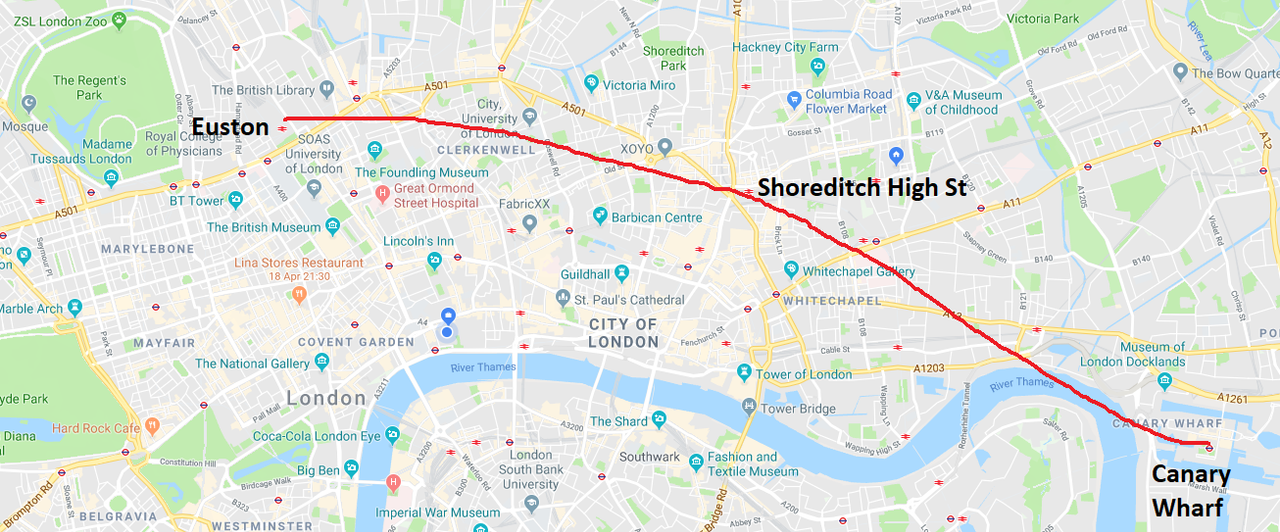
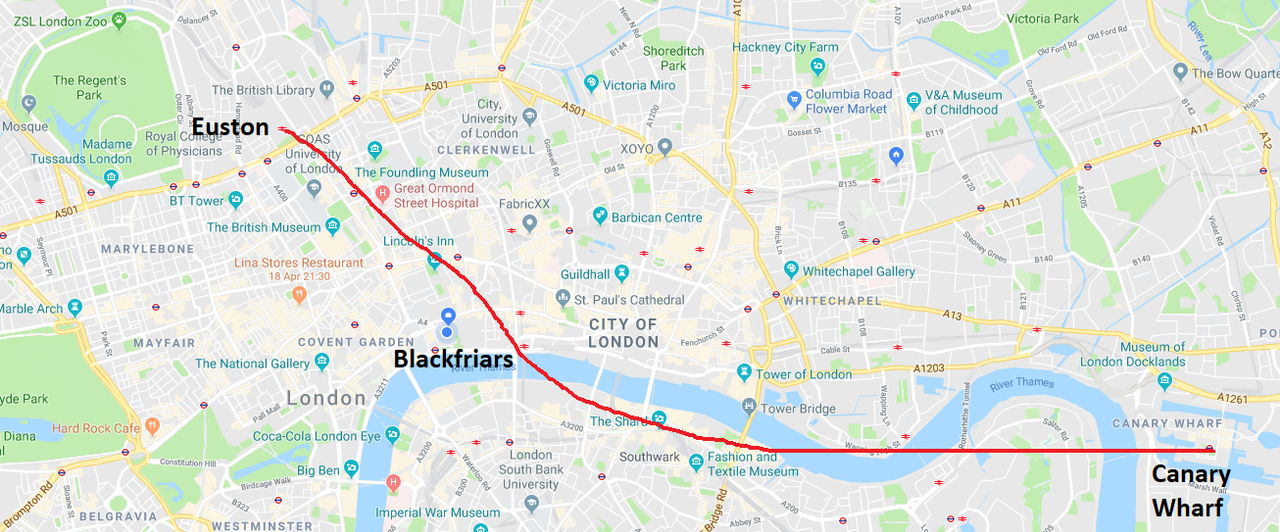
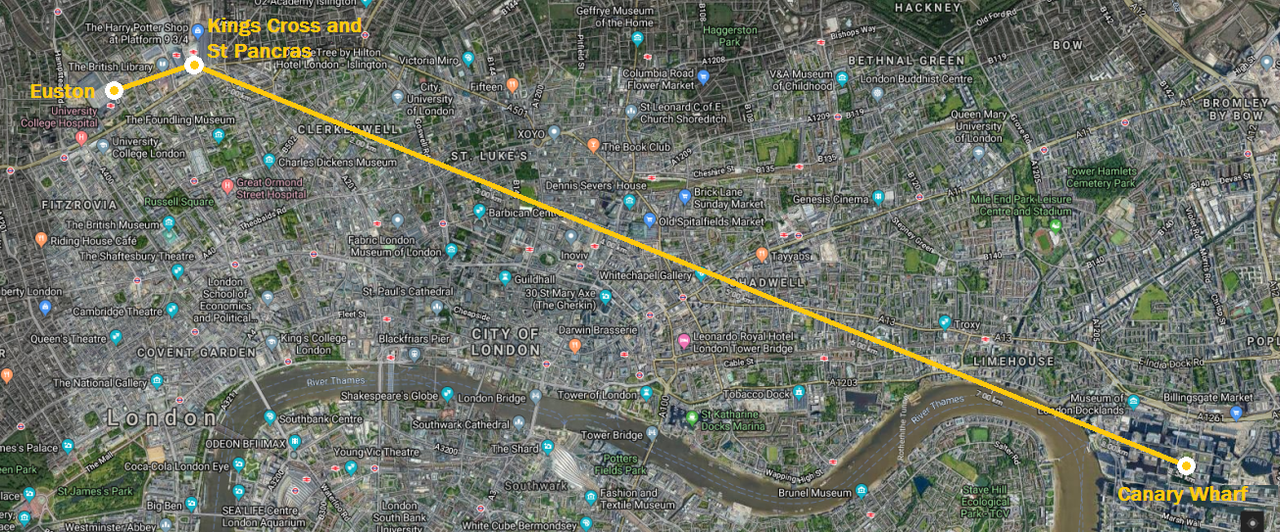
On 17 April, the Web site City Metric published a related article, Could London get a new tube line from Canary Wharf to Euston?. The author, Jonn Elledge, asks what route the line might take, and in particular whether the proposed line should take a route mainly through North London or through South London. Here are the two routes which Elledge considers, as well as a straight route which I use for comparisons. (The ikon means that the link opens in a new window. The ikon means that there is a foot-note.)

Northern route through Shoreditch
 

Southern Route through Southwark

Straight line route including King’s Cross

The distance by rail from Euston to Canary Wharf is at present 5 miles 48 chains, and it takes thirty minutes on the London Underground, changing at Tottenham Court Road and Bank. That gives an average speed just over 11 mph, which is not bad for public transport in a highly congested city. Travelling in a straight line with one station at King's Cross, an Underground train would cover the distance of 5 mi 27 ch from Euston to Canary Wharf in 14¼ minutes. Its average speed over the straight line route would be 22½ mph. 1

While the choice of route is obviously important to engineers, Underground train drivers and people who like drawing lines on maps, passengers care little about the route which the train takes, since they can’t see anything out of the windows. The proposed hybrid service is reasonably quick and more interesting to the jaded international businessman than an underground tunnel running the whole distance. London is, after all, one of the world’s greatest cities and the least the government can do is to show it off to travellers from lesser places who might never see any of London otherwise. The proposed service also complies with Transport for London’s River Action Plan, published in 2013, which aims to double the number of people travelling by river, its target being 12M commuter and tourist trips every year.

The existence of wharves at Embankment and Canary Wharf and a navigable waterway linking the two suggests that the government ought, for at least five minutes, to consider planning a route via Embankment Pier. Passengers travel from Euston to Canary Wharf by Underground as far as Embankment Pier and by riverboat from Embankment Pier to Canary Wharf. It would make sense to pay the small additional cost involved in including King’s Cross and St Pancras stations in the scheme, since they are important arrival points for business passengers coming from Scotland, the north of England and the continent.

Euston to Embankment

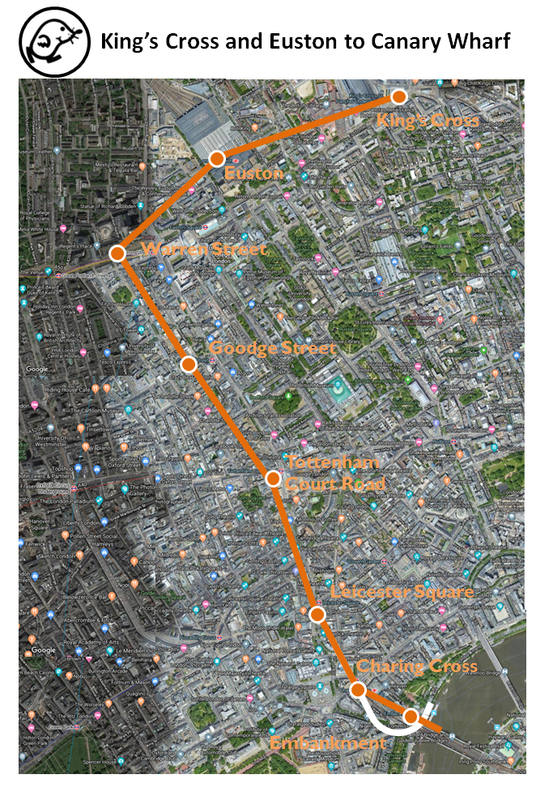
From Euston to Embankment Pier, on the Thames, is barely two miles. The Northern Line already runs from Euston to Embankment. We have three choices: (a) use the Northern Line as it is, or (b) build bypasses around the intermediate stations on the Northern Line so that express trains can go past them without stopping, or (c) build a new underground line from King’s Cross and Euston to Embankment Pier. A railway tunnel from Euston to Embankment Pier would cost about £630M, from King’s Cross £850M. 2

The Northern Line does not at present provide a direct link from King’s Cross to Euston. Using the Northern Line as it is will make the journey from King’s Cross to Embankment inconvenient since it will involve changing trains at Euston.

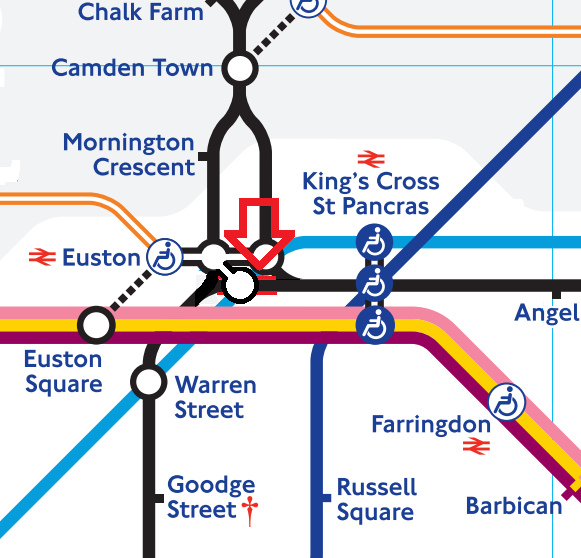
And at this point in the story, we can have fun drawing lines on maps. 3
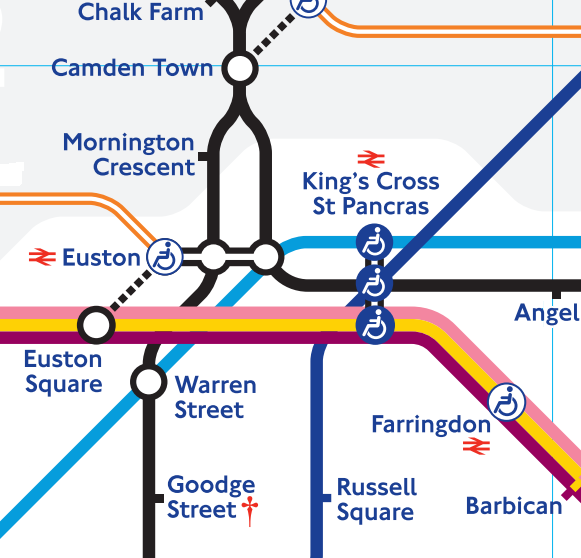

    
A service from King’s Cross to Embankment via Euston requires a change at Euston.

We can create a faster service from King’s Cross via Euston by constructing a short link from one branch of the Northern Line to the other.
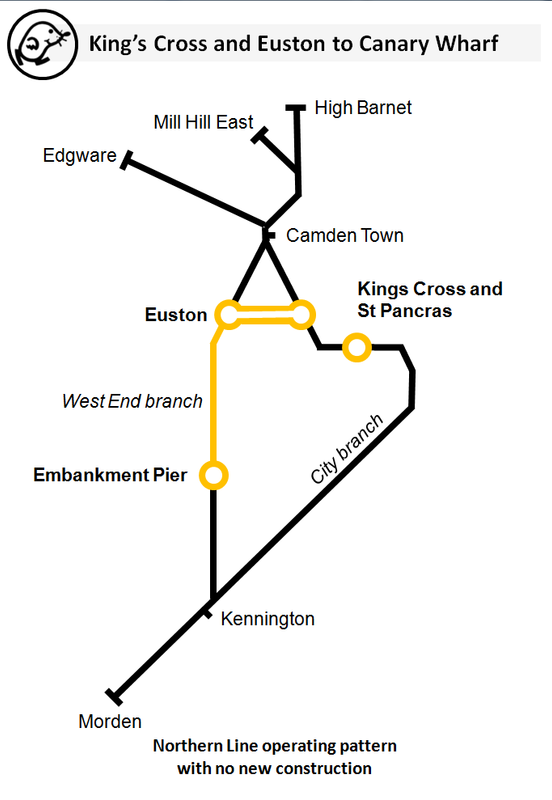
The creation of that link complicates the operating pattern of the Northern Line, which is already quite complicated.

This is the present operating pattern. Trains leave both King’s Cross and Euston for four different destinations. (Five if you count Kennington, where some southbound trains terminate.)

With a direct link from King’s Cross to Euston, trains leave both King’s Cross and Euston for five different destinations, or six if you count Kennington.

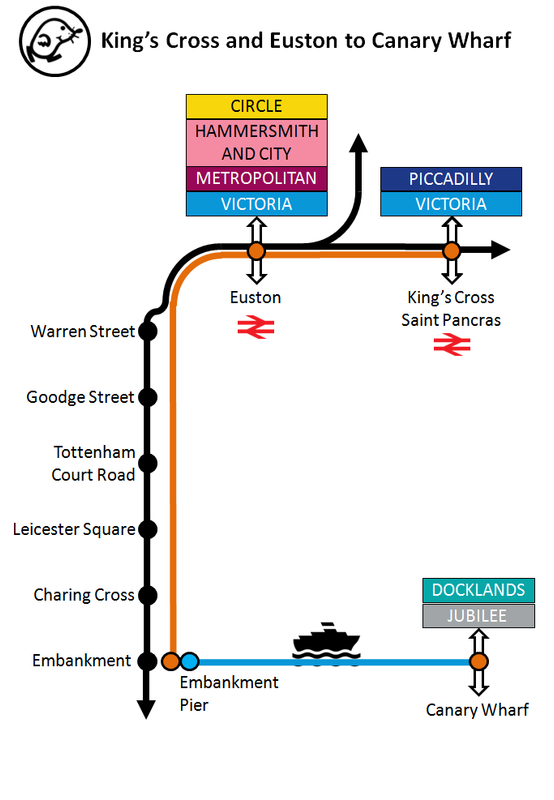
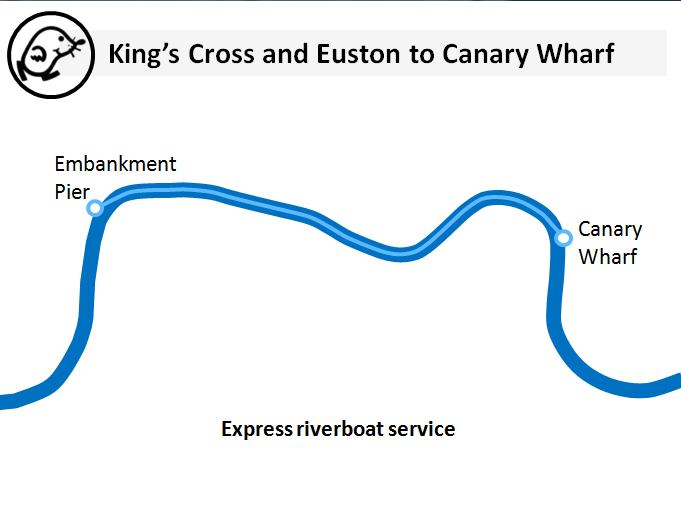
This is the schematic diagram of the express service from King’s Cross and Euston to Embankment Pier, showing interchanges with other Underground lines and the ferry service to Canary Wharf.


4
We have now reached Embankment Pier.

A train from Euston to Embankment must pass through five intermediate stations. Stopping trains will delay the express service unless action is taken to prevent the delay.

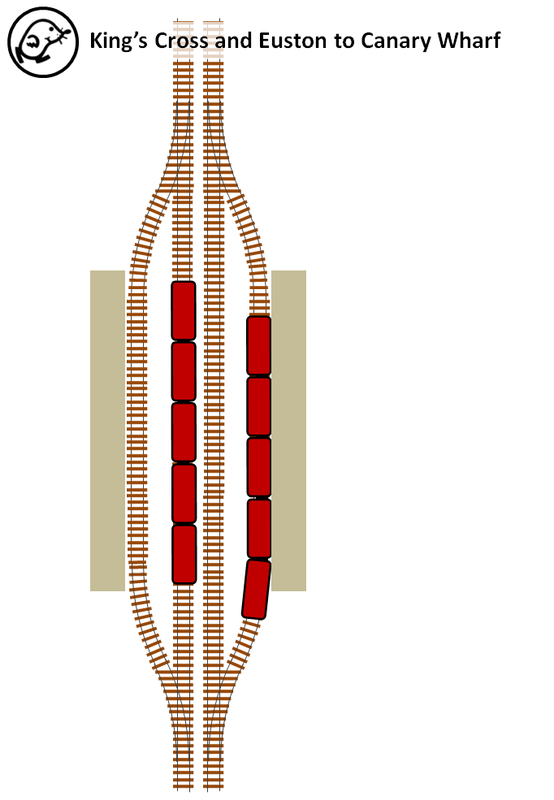
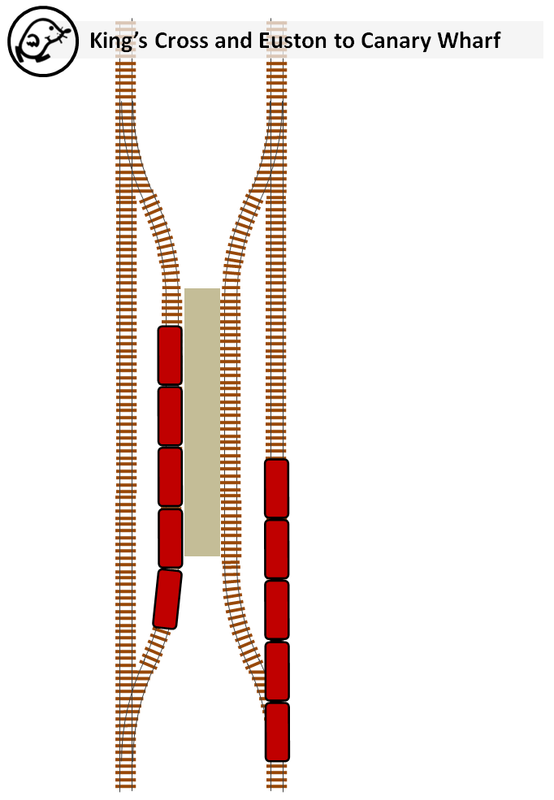
An express route, which requires the excavation of about two miles of tunnel, is one possibility. Another is the creation of by-passes so that trains on the Canary Wharf express service can pass through the stations without stopping while stopping trains still call at the platforms. Note that the existing tracks are used for the express trains so that they do not have to decelerate to run over the turnouts safely. Stopping trains slow down and use the turnouts.


At some stations it will be possible to provide bay platforms for stopping trains, and non-stop trains will use the existing tracks. The existing platforms will be retained for such uses as emergency evacuations, access to track, or bomb shelters. A detailed survey of underground objects will be required to determine where this type of by-pass can be built. This type of by-pass can be used even when the running lines are vertically separated.

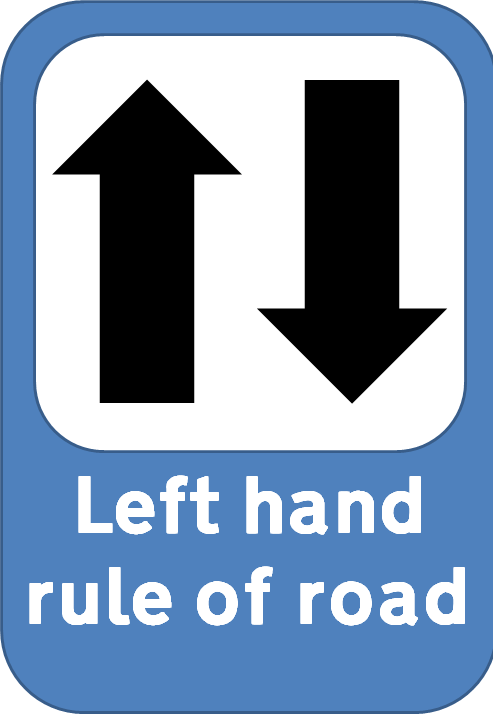
Left hand rule of road
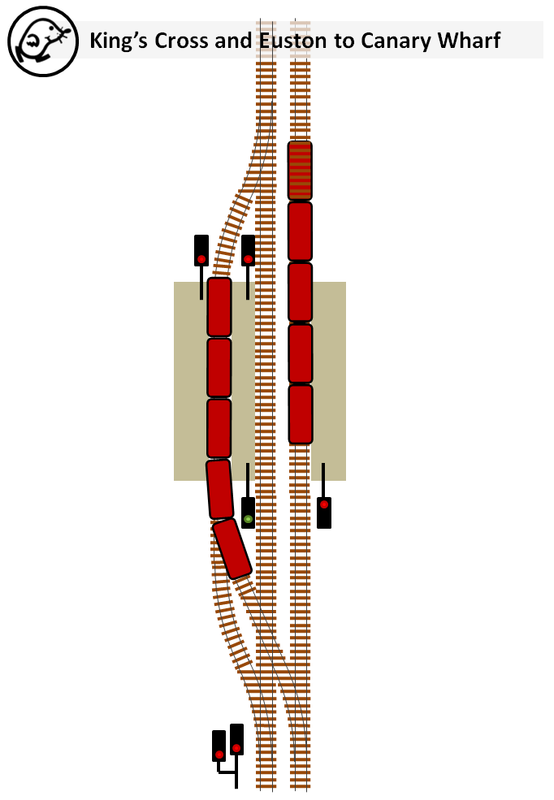
Where the running lines are horizontally separated by 60 ft or thereabouts, and they are not vertically separated, the bay roads can be built between the running lines. This results in lower cost, but passengers dislike island platforms.

At the terminal of the express service, a bay platform needs to be provided so that trains operating the express service have time to lay over and for the driver to change ends.


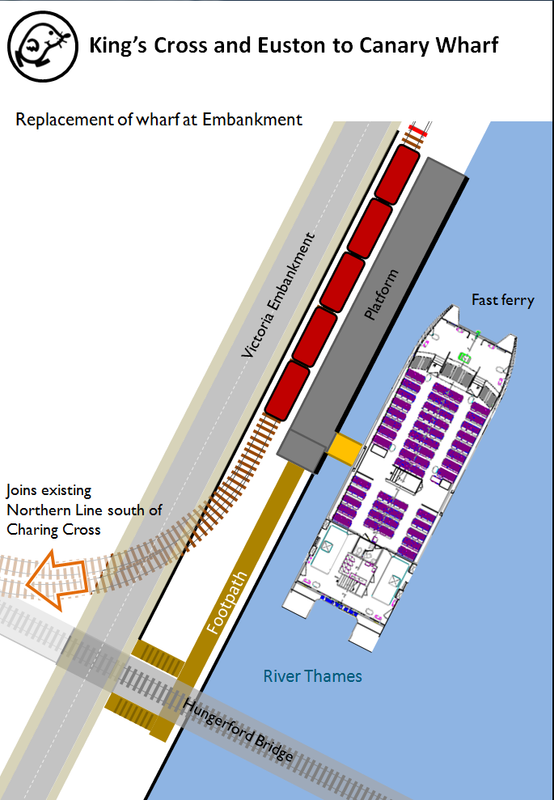
Although Embankment Station on the Northern Line is close to Embankment Wharf, it might be possible to provide quicker transfer from the Underground train to the ferry by building a station immediately beside the wharf on the lines of a marine station, like this.
The route map of the riverboat link between Embankment Pier and Canary Wharf runs along a fairly straight segment of the River Thames. It is 5 mi 10 ch in length, which takes 10½ minutes.

No new piers need to be built although Embankment Pier could be adapted to offer fast rail to ship transfer.

Catamaran riverboats of the type most recently acquired for passenger service on the Thames, operated by Thames Clippers, are Incat catamarans 35 ft 10 in long, 27 ft 3 in beam and capable of carrying 150 passengers at a speed of 25 kn. Each riverboat requires three or four crew.

The cost of a riverboat is expected to be about £3¼M. 5

It is expected that three riverboats would be sufficient to provide a service every ten minutes.

Notes

1. Timings for the Underground are taken from the published timetable. Timings for the Thames ferries are taken from the MBNA Thames Clippers published timetable. Speed of Edinburgh Trams are calculated from data in Wikipedia and Edinburgh Trams timetable.

2. Costs. I used the figure £315M per mile to estimate the cost of tunneling. The figure is taken from a light rail project in Toronto, converted to British Pounds at the inter-bank exchange rate. It is regarded as high by people who know more about tunnels than I do. For a consideration of costs of urban railway in tunnel please refer to Are Tunnels for Light Rail really cost prohibitive? by Klaus Philipsen.

3. Mole. The cartoon drawing of a mole is adapted from the winning entry of a competition held in 1971 to find a logo for the Helsinki Metro.

4. Maps from Google Maps. Ferryboat drawings from First Ferries.

5. Ferry boats. Capital cost from Thames Clippers website. Mechanical and performance data taken from Shipping Today & Yesterday website.

Wednesday, 1 May 2019

Painting in sections

Painting in Sections On Sunday I was struck by a painting, unless it was two paintings, that I saw in an exhibition. It was a perfectly competently painted heron and a rabbit hiding in the undergrowth — unsuccessfully, of course, otherwise the artist wouldn’t have known they were there, and he would just have painted the undergrowth. If I think about it, next time I’m there I will photograph it and show it to you. The unusual feature of this painting was that it was made of two separate halves, with the heron on one panel on the left and the rabbit on the other panel on the right. There was a gap of two inches or so between the two panels. That makes it a polyptych, but not a diptych, apparently, because the two halves of a diptych have to be joined together with a hinge, whereas the two panels of a polyptych can be separate.

Usually any sort of image that you see around you is in one piece. Pictures of a hamburger behind the counter in Macdonalds, for instance, are in one piece. They don't show the left half on the hamburger on one panel and the right half of the hamburger on the other panel. They don't even show the bun on one panel and the patty on the other panel.

I could only think of one kind of image that is commonly drawn on several — four, in this case — separate panels. I wondered whether it was possible to convert any painting that I know of into a four-panelled polyptych and if so, what the result would be.

Suddenly it dawned on me. Here is the result.

Click the image for a larger version.

5 May 2019. Today I visited the café where I saw the two-panel painting of the heron and the rabbit. I regret that the painting is no longer on show there.

Election 2019: On the doorstep

Election 2019: On the doorstep On 2 May 2019, there were local elections in England, one council by-election in Dundee, and various elections in Northern Ireland. Then on 23 May there were elections to the European Parliament.

This is where the story really starts, T☆ry supporters going out on the stump, banging on doors, have been attacked by enraged voters as soon as they mentioned the government’s shambolic un-attempts to leave the European Onion. (See this story in the Daily Mail, for example.) To counter this tendency, local T☆ry agents have advised candidates and their canvassers not to mention what has become known as “Brexit.”

So what are candidates going to say when a voter answers the door to them?

Here is my two pennyworth. How to avoid conflict on the doorstep, for T☆ry candidates.

Avoid mentioning, in alphabetical order, Brexit, care for the elderly, energy prices, the Health Service, homelessness, illiteracy, inequality, pensions, the railways, tax avoidance, unemployment, wages or wars abroad.

Anything else is all right.

Edited 26 May 2019.

Note: It is neither desirable nor necessary to attack a T☆ry candidate, or anyone else. This blog is opposed to violence. Just vote for someone that you think will govern the country better than the T☆ries have been governing it for the last ten years. It isn’t difficult.

Sunday, 14 April 2019

Let’s all take the mickey out of husbands

Let’sall take the mickey out of husbands This post is about a short series of photographs which appeared first on the web site Bright Side and which were picked up by the on line edition of the Daily Mail dated 3 April 2019.

In about 1965, the irrepressibly comic Mad Magazine published a cartoon of a television anchorman introducing a funny man on a television variety show. I had forgotten this cartoon for years, but for some reason it came to mind after I looked through the article on Bright Side. I've lost the original cartoon, so this thumbnail on the left is my re-creation of it, and that will have to do.

← Click on the thumbnail for a bigger picture.

Firstly, here are some of the photographs that Bright Side and the Daily Mail on line wanted to show their readers. They depict purported acts of incompetence and stupidity committed by the husbands of some women, who sent Bright Side photographs of the outcomes of the acts.

The captions don’t actually say “See how stupid he is?” but if they did, the phrase would make their purpose clearer. These are not jokes, but sneers.

↘ Click on the thumbnails to see the bigger versions.

Sarcasm is the lowest form of wit, as Oscar Wilde remarked. What Mr Wilde actually said was, “Sarcasm is the lowest form of wit, but the highest form of intelligence.” but what I think these gibes are is the sort of thing Jo Brand comes out with. “Men are rubbish, aren’t they. I wish I had a cake. Cakes are much better than men, because they have eggs in, etc.”

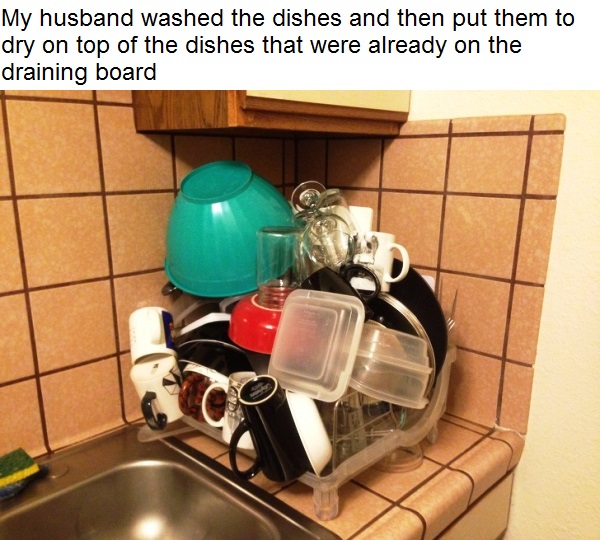
Some of these pictures probably really indicate that the husband was at least momentarily confused for one reason or another, but that does not make him stupid. The car keys left in the fridge looks like a genuine senior moment and so does the pile of dishes all drying one on top of the other on the draining board. The bed unmade on one side probably means that the husband has to be out of bed before six in the morning in order to get into the office fifty miles away by eight thirty. The balloons with the wrong date on might reflect how hard the husband was working on a costing for a five mile river bridge that he has to present after lunch in the hope of winning a half billion dollar contract. On the other hand, the fan drying pots and pans in the dishwasher looks fake to me: a wife seeking to amuse the world by faking evidence, which she then presents to everybody on the planet, not just the neighbours, of how stupid her husband would have to be to do that.

Sneering of that sort has a place, of course. Who doesn’t accept that a camel is a horse designed by committee? The phrase is meant to draw attention to the wisdom of crowds, a curious statistical phenomenon which means that when an estimate is made by a large number of people, it is more accurate than an estimate of the same number made by one person, or a small number of people. I put a note explaining what it is at the end of this web page.

So a comparison in which a piece of work is done better by one agent than by another isn’t necessarily an unworthy and demeaning sneer, but the cheap, demeaning sneering needs to stop. But since, at the moment, it’s legal to sneer at men it has to be legal to sneer at women, even though I dread to think what would happen to you if you sneered at a transvestite, here are a couple of wife sneers to even the score.

↘ Click on the thumbnail to show the sneer.

My wife, incidentally, is really nice and very good at everything she does. The sneering is purely for comparative comedic purposes and does not refer to any actual clumsiness or inferiority.

The photographs under discussion are the copyright of the people who took them and sent them to Bright Side.

The wisdom of crowds refers to the extraordinary seeming (until you do the abstruse mathematics behind it) fact that if you have a large number of guesses at a target number, the average of all the guesses is always a better estimate of the target than the best individual guess. In a “guess the weight of the cake” competition, the average of all the guesses is closer to the actual weight of the cake than the winning, and closest, guess.

Thursday, 4 April 2019

A letter to the local Tories

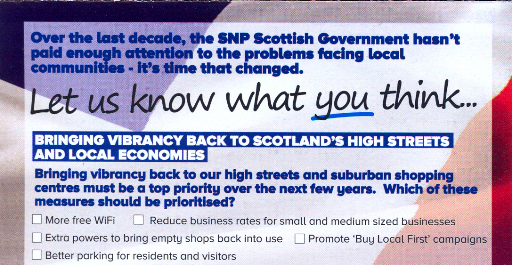
A letter to the local Tories I received a leaflet from the local Tories. On the back was a survey titled Let us know what you think. That's it, on the left there. Click to enlarge.

These are my answers. They didn’t fit on the form so I wrote them as a letter and posted them to Ruth Davidson, leader of the dwindling band of Tories in Scotland. Her office address was included on the form as the address to which replies should be posted, so I have not, so far as I know, breached her privacy by posting to the address given.

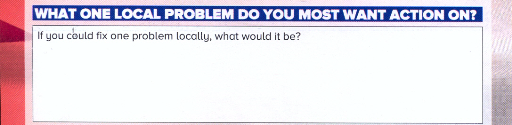
I have included the questions as images in this post.

I noticed that the first question is laid out over a picture of a French flag. That detail becomes more obvious when you look at the scanned and colour corrected image. Why the Tories would want a French flag on their survey, I can’t imagine. It’s almost as though you could put a French flag at the top of a document by mistake and not notice.

Dear Ms Davidson

Re. Let us know what you think

Thank you for your leaflet, which invited comment on some local issues. My comments won’t fit on the form so I am writing them on paper.

1. Bringing vibrancy back to Scotland’s High Streets…

It has become common for unsuccessful stores to blame their lack of customers on the internet. What I’ve never seen pointed out is that the goods that Debenham’s or Fraser’s sell are difficult to sell on line (perfumes, clothing, cosmetics etc.) Many small stores, with which the internet stores do not compete, are closing too. Debenham’s and Fraser’s also accept orders on line on their own servers, thus diverting lucrative internet traffic back to themselves. The poor financial performance of those companies is unlikely to be due to competition from on-line sales and much more probably due to a mixture of indifferent management and rising poverty. It is the lack of economic activity, the sheer shortage of money, together with the impact of one half-baked management fad after another, that has brought these venerable, hundred year old firms down. The remedy is the relief of poverty: create some well paid jobs, abolish zero hours contracts, double the basic rate of social security, raise the old age pension to £27,000 p. a., increase Job Seeker’s Allowance so that it becomes enough to live on, abolish benefit sanctions, double the minimum wage and so on, so that people have some money to spend.

If you want more people to go to their local High Street to shop, you could try re-opening the public toilets. The fiction that local cafés and small shops would allow any Tom, Dick and Harry off the street to use their toilets without buying anything in the shop was never going to work, and everybody knew it.

Incidentally, I’m also curious to know why this issue is your top priority. Of all the crises that surround us — hunger, illiteracy, immigration, unemployment, train fares, the list goes on for ever — why does top priority go to a couple of chain stores selling cheap Chinese rubbish and going bankrupt?

2. Many key local services are under pressure…

Definitely GP services in my case. It’s absurd to have to wait two or three weeks for a simple GP appointment. The way to have more doctors is to bring back the full student grant, so that anyone who passes the examinations and the interview can become a doctor without needing to have rich parents.

I also doubt that I am the only person who has been struck by the degree of illiteracy and innumeracy displayed by pupils at local schools. I am astonished by the placatory rubbish that has replaced the teaching of reading, writing and maths in the schools.

3. Which crime and anti-social behaviour…

Motorists parking on the pavement. They’re a damn nuisance.

Bring back policemen on patrol, not driving around in cars where they can’t see or hear anything. Real policemen, not PCSOs.

4. Which one local problem do you most want action on?

Unemployment. I have been looking for a job without success since 2014 and I have applied for well over a thousand. There are no jobs. I wish that the DWP would stop believing its own propaganda. The ‘highest employment on record’ is due to poverty. People at the end of their working lives cannot afford to stop work, an appalling state of affairs.

5. Do I want another referendum on Scottish independence?

No, I don’t want another referendum on Scottish independence. I want Scottish independence. How you imagine Scotland can be economically successful when its capital and income are both leached wholesale by the benefits economy of England is beyond me.

6. Who do I think would make the best First Minister?

Me.

7. How am I most likely to vote at the next election?

Probably SNP.

Regards,
(signed) Ken Johnson BA MSc

Tuesday, 5 March 2019

A good word for ‘The Brick Street Mural’

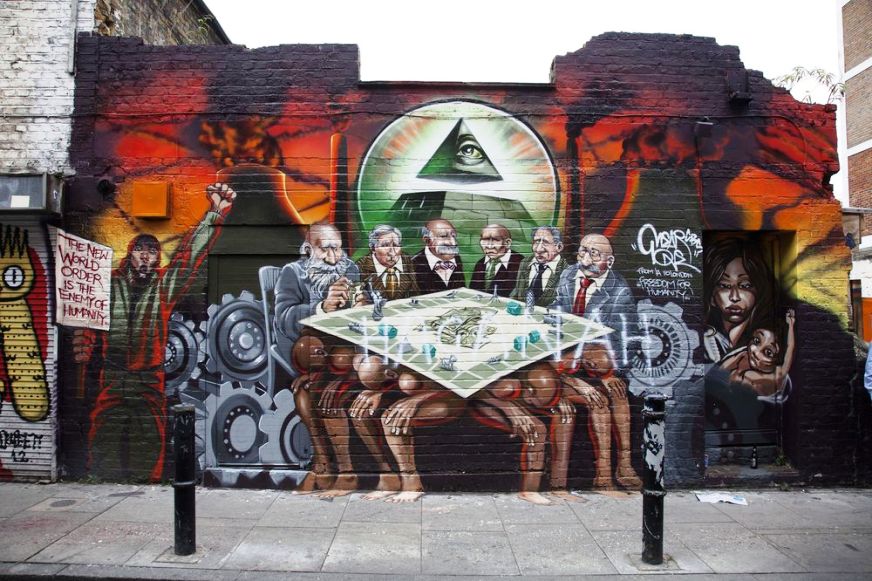
The Brick Lane MuralThis mural, by the artist Meah One, has been in the news for a few days. Dubbed ‘The Brick Lane Mural,’ it is, or was, actually on Hanbury Street, which is near Brick Lane in London but isn’t the same place. Lord Falconer, called upon by the Labour Party to root out anti-Semitism, proclaimed the mural ‘indefensibly anti-Semitic,’ and Tower Hamlets Borough Council has now painted it over, to the great annoyance of Meah One. Jeremy Corbyn, poor soul, has even been forced into recanting his opinion that he quite liked it.

Which is a pity because if Lord Falconer, or anybody else, had looked at the mural before condemning it, they would have seen that it is not anti-Semitic at all.

Look at the men playing Monopoly. Apparently they must be Jews because they have hooked noses, which probably makes Lord Falconer the first man in history to be able to divine a man’s religion by the shape of his nose. Looking more carefully, you can see that none of the men is wearing a kippah (brimless cap.) There are no Jewish symbols in the rest of the picture: no star of David, no seven branched candlestick, no mezuzah on the doorway.

No, the only symbolic object in the picture is the Eye of Providence, the pyramidal stone with an eye on one face, visible on the disk behind the players. The same symbol is also to be found on the back of the US dollar bill, where it forms part of the design of the Great Seal. It has an ancient origin, but these days it connotes Freemasonry.

So the six men playing Monopoly — there are no female Freemasons — are not Jews. They are Freemasons. The mural isn’t anti-Semitic at all. It’s a satirical comment on the Freemasons.

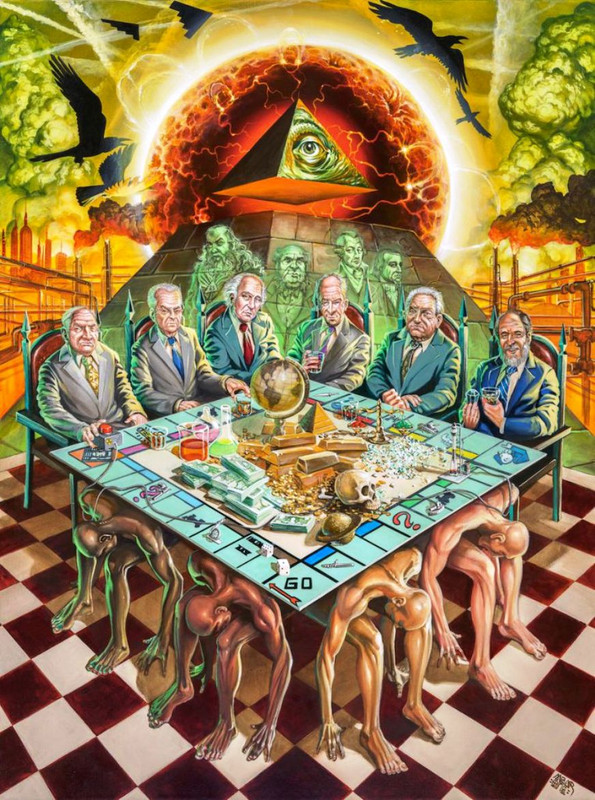
6 March 2019. I have learned that Meah One has since painted a second version of the Brick Lane Mural, from which all hooked noses have been removed. Meah One describes the Monopoly players as ‘banksters,’ which does not imply that they are Jews. I wish that I could interpret the symbolism on the new version, in particular the black birds flocking overhead and the pale figures painted, or projected, on the wall behind the players must mean something, but I am reasonably sure that they do not originate in Judaïsm.

Here is the new version.

Sunday, 20 January 2019

What's wrong with the metric system

What’s wrong with the metric system? This year marks the 54th anniversary of the decision, taken by Harold Wilson’s government in 1965, that Britain was to go metric. Wilson, it turns out in retrospect, was obsessed with the idea that Britain should have a positive balance of visible trade with the rest of the world, despite the fact (as was pointed out at the time) that Britain had never had a positive balance of visible trade since mediaeval times and had a negligible prospect of achieving one.

Did you get swept up in the jubilant celebrations four years ago, in which millions of once gruesomely oppressed carpenters, map makers, printers, pub landlords, coal miners and tailors drank themselves senseless as they recalled casting off the shackles of feet, inches, miles, foolscaps, pints and hundredweights and replacing them with things whose names began with centi and kilo and mega? You didn’t? Neither did I.

In 1668, an English bishop, John Wilkins (1614-1672), published a book with a plan for a ‘universal measure’. You might think that a logically organised system of weights and measures would be so appealing to the man on the Clapham omnibus that all who heard of the metric system would immediately hurl their Imperial tape measures and scales and beer glasses into the nearest deep water harbour as they liberated the depths in fathoms by painting them over with metres. Not a bit of it. Mr Wilkins’s suggestion was more or less ignored until the mad French dictator Napoleon imposed the metric system on traders in his country by force, sending a special metric police force into the marketplaces to smash any eighteenth century French pounds and ounces they came across and then beat the trader using them to a pulp, just to show him who was boss.

Anyone who wants to learn just how barmy Napoleon’s metric system really was needs only to take a look at the French decimal time and decimal calendar, forced onto the French public in 1793. Decimal time lasted all of eighteen Gregorian months before being ignominiously abolished, while the decimal calendar was kept going until XIV, or 1805 as everyone else called it.

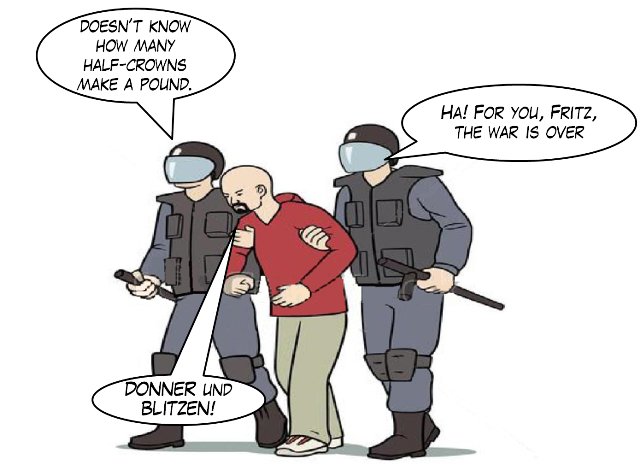
In a curious echo of the way Napoleon dealt with market traders who shunned his new-fangled measurements (see picture, below), British Consumer Protection jobsworths suppressed dissent by prosecuting Mr Steve Thoburn in 2001 for daring to sell a pound of bananas to a customer who asked for a pound of bananas, contrary to the Weights and Measures Act 1985, and so petty were they that they confiscated his Imperial scales.

Why should the metric system have aroused indifference on such a massive scale despite, allegedly, being a spectacularly good idea? Everywhere you look in the metric system, ten of something makes one of something else. Isn’t that idea simple and elegant enough to guarantee the metric system fame, fortune and a place in every grocer’s shop in all the length and breadth of Bonny Scotland for the rest of eternity?

Well, no, it isn’t.

It is true that throughout the metric system, the answer to any question about how many of these makes one of those is always ‘Ten.’ In the Imperial system the answer could be eight, twelve, thirty six, eighty, one hundred and forty four or even five thousand, two hundred and eighty. But although this ubiquity of tens may be an attractive feature of the metric system, it isn’t actually a useful one. In other words, if the answer’s ten, you are asking the wrong question.

Obviously, if a collection of weights and measures created for a myriad different purposes over a period of more than a thousand years and related to each other by so many different ratios that schoolchildren used to have tables of the best known ones printed on the back covers of their exercise books, it never mattered much to anyone that the ratios appeared to be as random as lottery numbers. If the apparent randomness had been a problem, the Imperial units would have been rationalised centuries ago.

Ask not how many of these make one of those. Ask instead, ‘What weighs one kilogram?’

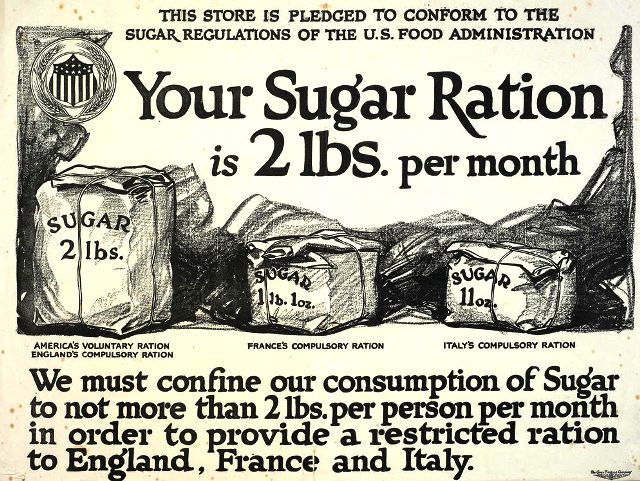
The only thing I can think of, apart from a certain piece of platinum which is slowly wearing out in a museum in Paris, is a pack of sugar, and I guess that is because before they metricated it, sugar was packed in 2 lb bags. Even the abbreviation lb for pound is a nod to the antiquity and lineage of the Imperial unit: it comes from Latin. The pound itself was first defined in around 1300, and so was the yard, while the pint and the gallon have a confused history, started life in antiquity and were standardised in 1824. (Well, that’s really only true for small values of standardised. The United States pint is sixteen fluid ounces; the British pint is twenty.)

But ask the same question of Imperial measures and you can't throw a stone (a unit which, incidentally, originated in Roman times) without hitting an answer.

What weighs one pound? A pound of meat is enough to feed your family. What has a volume of one pint? A pint is the amount of beer you want to drink. What has an area of one acre? An acre is the area that you can plough in a day with two oxen. What weighs one hundredweight? Anything in a sack, because a hundredweight is the weight that a man can lift.

That is the conceit that keeps Napoleon's metric system going: that all lengths, all weights, all volumes can be measured by what are, when you look closely enough, three basic units, and one size of each of them fits all.

One of the unsung glories of the Imperial System was that every trade used units of measurement which it found appropriate. Tailors, for one example, measured their customers in feet and inches but cut their cloth in ells, which were handier than feet and inches for the purpose of cutting clothes. Farriers measured horses in hands and racecourses in furlongs, both of which turn out to be easier to use for their purposes than feet and inches, let alone metres. Surveyors and railwaymen measured lengths of track in miles and chains, perhaps because feet and inches gave a spurious appearance of immense accuracy. Ships’ crew navigated in nautical miles and knots rather than in ordinary miles and miles per hour, because of the relationship between the nautical mile, the radius of the earth, the degree of latitude or longitude and the angle between the sun and the horizon. Over and above all these many specialised units, the remarkable British currency of pounds, shillings and pence also served all trades. The currency even felt more like money than decimal currency does. Sums of pounds, shillings and pence clinked and weighed heavy and had dates on the coins that went back to the early nineteenth century. Pounds, shillings and pence could be divided by two, three, four, five, six, eight, ten and twelve, as well as seven if you converted the sum into guineas. The same people who struggle to divide a decimalised pound by eight knew without thinking that there were eight half crowns in a pound. That’s the thing that advocates of metric have not realised, or have realised but won’t admit. Everyone could do it. There is, therefore, no advantage at all in every measurement being ten of another one.

At least, we who lived with it could do it. Even if they wore a bowler hat, carried a furled umbrella on a sunny day and suppressed the urge to goose-step along the main road, hold one arm horizontally and cry, Sieg Heil, German spies were usually rumbled when a newsagent realised they did not know how many half crowns there were in a pound.

A thousand years of evolution had created a system of measurements and currency that anyone could use and met all the needs of trade and industry after just half an hour’s daily instruction for seven years at junior school.

Of course, Wilson was right. Different countries use different ‘customary measurements,’ but so little use has been made of the metric system that it has not split up into dialects. Therefore, metric is ideal for international trade. Everybody agrees on what a tonne of steel or a metre of fabric is.

Secondly, metric is good for scientific measurements. It is easier to coin new units using metric measurements as a basis, and easier to calculate ratios if all the measurements involved are based on the same units. This doesn’t always work. For instance, there are two units for the energy content of food, kilocalories and kilojoules, and there are several units for very long distances including parsecs, light years and Astronomical Units.

And that's it. The metric system is no use for anything else, and there's no point in pretending that it is. No wonder you hear a sort of rumble of thunder in your head any time a BBC journalist reports that he is standing half a kílometre from the front line (invariably with the stress on the i) or a patient in hospital is fifty kilograms overweight. Nobody in Britain ever uses metric measurements in such contexts, unless they have a gun held to their head. May we never start.

10 July 2019.
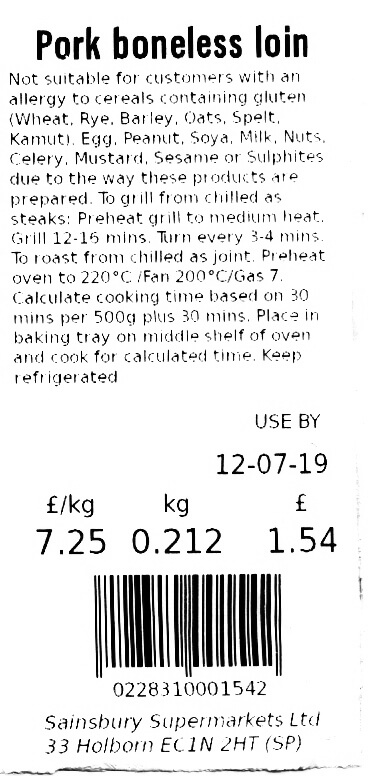
For anyone considering using the metric system, here (left) are the cooking instructions for a piece of meat that I bought at Sainsbury’s. They’re all in metric with no Imperial translation.

To roast from chilled as joint: Preheat oven to 220°C / Fan 200°C / Gas 7.

Calculate cooking time based on 30 mins per 500g plus 30 mins. Place in baking tray on middle shelf of oven and cook for calculated time. Keep refrigerated.

Now here are the price and weight of the meat.

£/kg kg £
7·25 0·212 1·54

Calculate the cooking time for the piece of meat.

(Answer: 42¾ minutes.)