Wednesday, 30 September 2020

Fantasy Engineering: The plan that failed — the Union Canal Waterbus

The plan that failed Could a passenger water-bus service operate on The Union Canal in the western suburbs of Edinburgh?

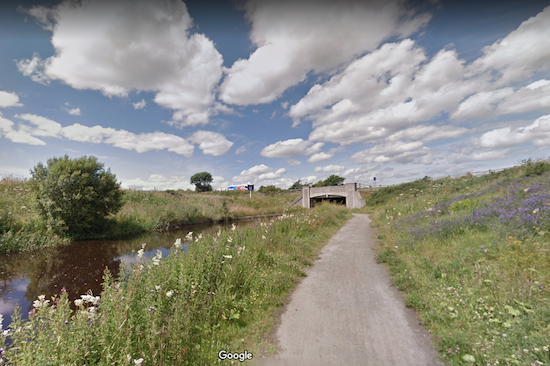
The Union Canal runs for 32 miles from Camelon, near Falkirk, to Tollcross in west Edinburgh. At Falkirk, the spectacular Falkirk Wheel joins the Union Canal to the Forth and Clyde Canal, which runs west to Port Dundas, Glasgow and to Bowling Harbour on the River Clyde near Dumbarton. and east to Grangemouth.

The Union Canal and the Forth and Clyde Canal were built to carry freight in what was then a heavily industrial area. There was a shale oil industry which covered mining, extraction and refining and produced motor spirit. There were mining and quarrying industries. The first detergent washing powder was also manufactured in the canal’s catchment area.

Here’s a map:
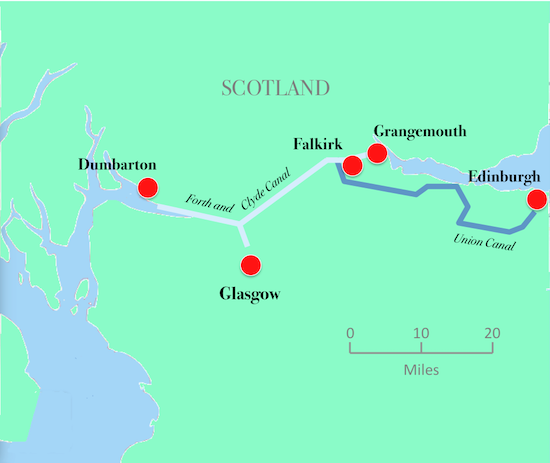
Map showing the Forth and Clyde Canal and the Union Canal
The Forth and Clyde Canal runs from Bowling (near Dumbarton) and from Glasgow in the west to Falkirk and Grangemouth on the east coast. The Union Canal links Falkirk to Edinburgh.

The Union Canal took four years to build, opened in 1822, became disused by 1920, closed in 1965 and re-opened to traffic after the completion of renovation work in 2001. Other transport infrastructure was being built in the same corridor at the same time. The railway from Edinburgh to Glasgow via Shotts opened in 1848, and the M8 motorway was built in stages and was completed in 2017.

An unusual feature of the design of the Union Canal, and one which makes it very suitable for passenger traffic, is that it has no locks. The canal follows the level of the 240 ft contour along its entire length. This means that the canal is appreciably longer than the 24¾ mile straight line distance from Camelon to Tollcross, but it is appreciably faster than a canal with locks would have been. Canal locks were a constant source of delay and irritation.

The canal towpath runs along the northern bank of the canal, except for the stretch that runs through Polmont in tunnel. In the tunnel, the bargee had to lie on his back on the barge and kick the roof of the tunnel to push the barge through it. The proposed passenger boat service does not run through Polmont.

Picture of the Falkirk Tunnel on the Union Canal
The Falkirk Tunnel on the Union Canal carries the canal beneath Prospect Hill in Falkirk and carried mainly cargoes of coal at the time.

I was moved to put computer, keyboard and mouse together and speculate about restoring a regular passenger service to the Union Canal when I read that ‘Swift Boats’ operated on the Forth and Clyde Canal in its early days and achieved a speed of ten miles per hour (8½ knots), providing a passenger service over the 24¾ miles between Lock Sixteen in Falkirk and Port Dundas in Glasgow at a speed distinctly faster than a stage bus. The Swift Boat service was heavily used, even though the single fare was four shillings (4s) in first class and 2s in second class. (That translates into £14·32 first class and £7·16 second class in today’s money, the first class fare coming remarkably close to the £16 cost of a ticket for a tour bus in Edinburgh today. See here.) The speed of ten miles per hour was achieved by using two horses to haul the boat and changing the horses often. Today the maximum speed of a barge is 4 mph (3½ kn), and Scottish Canals would be unlikely to agree to a higher speed for just one customer. Though, you understand, I’d have to ask.

I was curious to know whether it would be possible to operate a water-bus service on the Union Canal today, starting in Tollcross and conveying passengers ten miles or so to the western suburbs of Edinburgh.
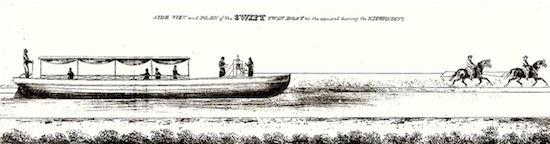
Drawing of a Swift Boat
A Swift Boat, like this one, pulled by two horses, achieved a speed of 10 mph in passenger service on the Forth and Clyde Canal

Water bus services in cities, of course, are not particularly unusual. Venice has a whole network of vaporetti where other cities have bus services or trams. London has the Thames Clipper services on the Thames between Chelsea and the O₂ building at Greenwich, as well as a water bus service on the Regents Canal between Little Venice and Camden Lock, operated by the London Waterbus Company.

A water bus of the London Waterbus Company
A waterbus on the Thames

In Scotland, The North British Railway operated ferries on some lochs to convey passengers from lochside villages to their railway stations. They ceased to operate years ago, but Sweeny’s Cruises still operate a tourist boat service in summer from a boarding point on Loch Lomond.

Waterbus operating on Loch Lomond
A double deck luxury waterbus operates on Loch Lomond, near Glasgow

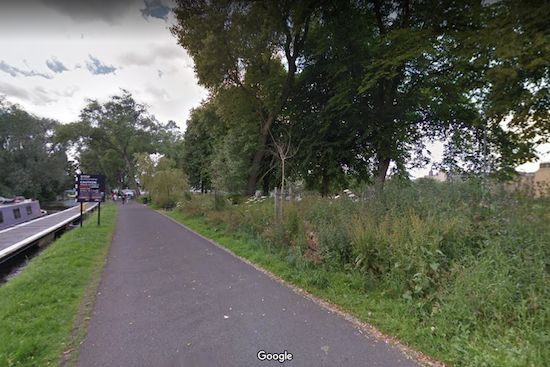
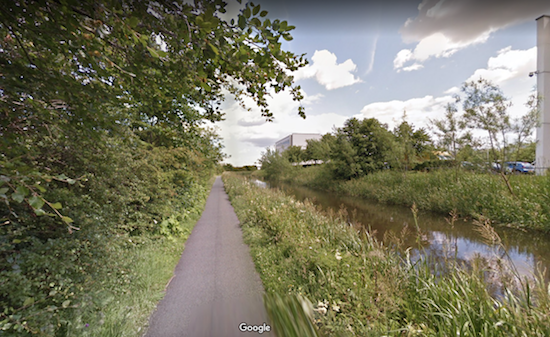
A waterbus stop on the Union Canalcould be as simple as a sign and a pontoon with mooring posts to enable the bus to stop and board passengers safely. A more elaborate waterbus stop would have lighting and a shelter adequate for Scottish weather conditions. The design has to take into account that a heavily used cycle path runs along the bank of the canal.

Design for a full featured waterbus stop on the Union Canal

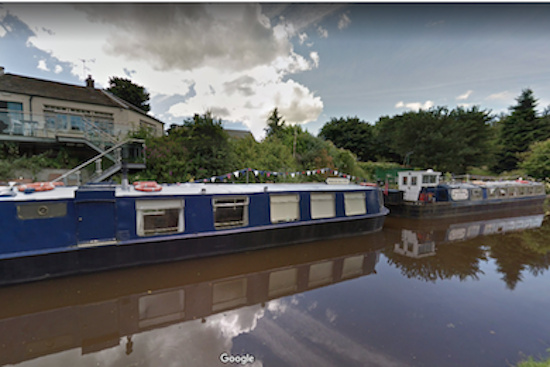
In Edinburgh, at the moment, there is no regular passenger boat service on the Union Canal, although numerous passenger boats are available to hire.

Armchair transport engineers, and I include myself, usually delude themselves that it would be possible to operate useful services over any disused railway, footpath or canal that could conceivably be re-opened, refurbished, re-built or re-used, and such services would be so popular among travellers that they would elbow, or if necessary fight, their way on board. If the service were steam hauled, that might even be true. Sadly, though, I had to conclude that in this case, commercial success of a passenger service on the Union Canal between, say, Port Buchan in Broxburn to Edinburgh would be impossible.

First things first, or, Drawing Maps is Fun.

I shall start by showing where the boarding points of the proposed service would be. Here is a map of the Union Canal showing the proposed stopping points. The service starts from the canal basin at Tollcross, on the west side of Edinburgh, and runs westwards to Port Buchan in Broxburn, a distance of thirteen miles. Then it turns round and comes back again. I chose Port Buchan because it is a rather quaint, usable canal wharf in a built up area where some residents might want to commute to Edinburgh, or just ride to Edinburgh for fun on the boat.

Map showing the Union Canal and boarding points
A map of the Union Canal showing the extent of the waterbus service and its boarding points
Running a public transport service on the Union Canal

Drawing of a Union Canal waterbus
A design for a waterbus carrying 40 passengers on the Union Canal

The maximum speed limit on the canal is 4 mph and a stop is expected to take three minutes. This includes time for the waterbus to come to a stop, moor at a pontoon waterbus stop, wait for passengers to embark and disembark, and for the waterbus to cast off from the pontoon bus stop and accelerate to the operating speed of 4 mph (3½ Kn.) This includes deceleration and acceleration, but since a passenger carrying vehicle cannot accelerate or decelerate at more than 0·1 g, acceleration from rest to full speed each take about 2 sec., which is regarded as negligible. We can compute journey time as 15 minutes per mile plus 3 minutes per stop.

Map of timings and distances
Timings and distances in miles between boarding points on the Union Canal

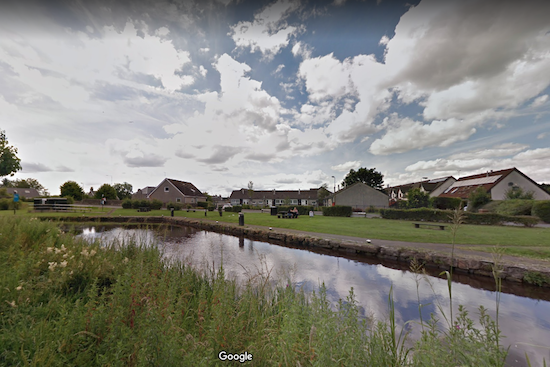
Waterbus Boarding Points

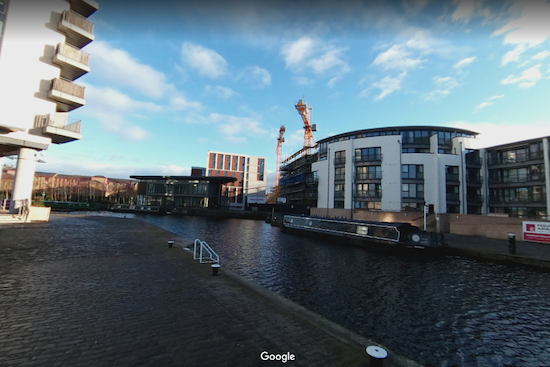
Bus Stop Tollcross is the original eastern terminus of the Union Canal, on the site of Fountainbridge Brewery. The terminal is ¼ mile from Lothian Road and ¾ mile from Princes Street. It is also close to recently built office blocks and to the Edinburgh Stock Exchange.
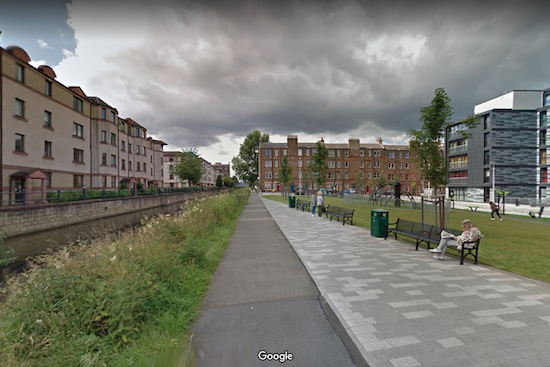
Bus Stop Fountainpark is an area given over to entertainments like cinemas and restaurants, functioning as a community hub. There is a large pedestrian square here with pubs, restaurants, a cinema and other amenities, as well as a walkway to Dalry Road. Haymarket Station and tram stop are just under one mile from Fountainpark. There are a number of student residences at Fountainpark.
Bus Stop Harrison Park is a recreation ground. There are public facilities for servicing narrowboats at the western end of the park, adjacent to the canal. Harrison Park is just over half a mile from Heart of Midlothian football club.
Bus Stop Colinton Road is intended to serve Craiglockhart, Morningside and Slateford in suburban south Edinburgh. This boarding point also offers an interchange with buses 18, 27 and 45.
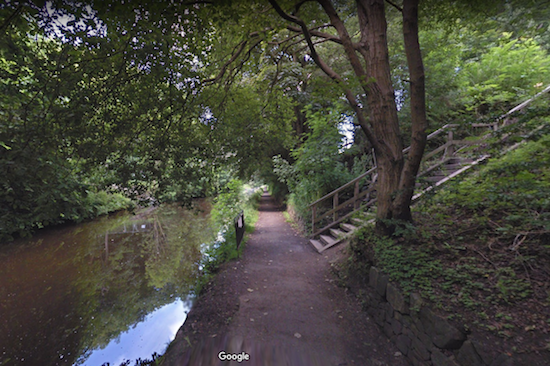
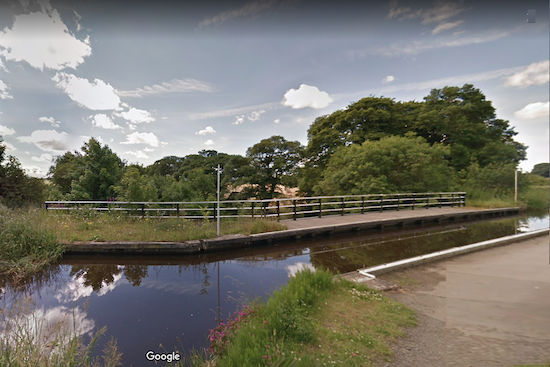
Bus Stop Longstone boarding point is at the western end of the Slateford Aqueduct, which is one of the more impressive features of the Union Canal. The boarding point also offers a stairway down to the Water of Leith Centre and the Water of Leith path.
Bus Stop Kingsknowe is next to Kingsknowe railway station. The railway crosses the canal just east of Kingsknowe boarding point. The boarding point also serves Kingsknowe golf club and is half a mile from the cyclepath from Redhall to Balerno.
Bus Stop West Side Plaza boarding point is 350 yards from West Side Plaza, which is a dreadful 1960s shopping precint with a bus station, a cinema and a public library. West Side Plaza is in the middle of Wester Hailes, an area of system built blocks of flats erected in the early 1970s. There is unlikely to be much commuter traffic to Edinburgh from West Side Plaza because the bus services are excellent and the journey by water-bus takes about an hour. There is also a railway station close to West Side Plaza. It is on the Shotts line. Kingsknowe station is on the same line and is closer to the canal.
Bus Stop Sighthill is an industrial area which includes several large workplaces and Hermiston Gait [sic] shopping centre. There is a tram stop at Hermiston Gait. This boarding point is 1¼ miles from Heriot Watt University. If there turned out to be a demand from students for daily travel between the student residences at Fountainpark and Heriot Watt University, a boarding point could be added at Hermiston House Road, ¾ mile from the university.
Bus Stop Ratho is a village on the outskirts of Edinburgh. This boarding point also serves Newbridge industrial estate, which might generate some commuter traffic.
Bus Stop Climbing Arena is close to the Edinburgh International Climbing Arena, which would generate some leisure traffic. The Climbing Arena is also very busy on those days when it is used to host competitions.
Bus Stop Clifton Road serves Clifton Hall School which might generate some school traffic and some leisure traffic. This boarding point is just over half a mile from the western edge of Newbridge Industrial Estate and might generate some commuter traffic.
Bus Stop
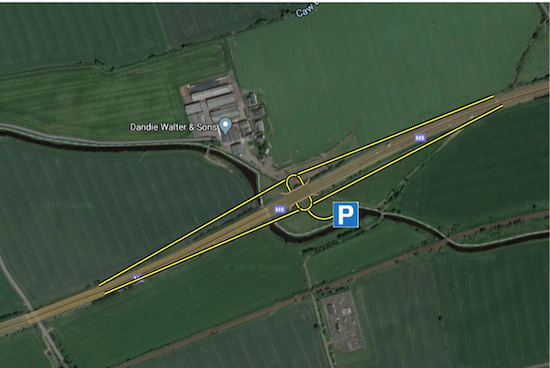
M8 Park and Sail was an attempt to provide an interchange between the waterbus route and the M8 motorway, which crosses the canal just south of Broxburn. Building this boarding point requires the construction of about half a mile of slip roads, as the nearest exit from the motorway is at Newbridge. This boarding point would allow convenient access from the motorway to the canal, which would benefit tourist traffic travelling by car from outside Edinburgh.
Bus Stop Port Buchan is the western terminus of the passenger service. It is a quaint canal basin in Broxburn, a former industrial suburb to the west of Edinburgh. Broxburn is a residential district, but East Mains Industrial Estate is one mile to the east and Houston Industrial Estate is 2¾ miles to the west.

At the start, I decided to create an operating timetable which assumed
a. that there were two mooring areas for waterbuses, one at each end of the route,
a. that the first journey from Port Buchan to Edinburgh should arrive in time for commuters to travel to work,
c. that there should be an interval schedule throughout the day.

My first thought was to timetable one waterbus per hour in each direction throughout the day. The first waterbus eastbound was to leave Port Buchan at 05:00 and the first waterbus westbound was to leave Tollcross at 05:30. The last eastbound service was to leave Port Buchan at 21:00, arriving in Tollcross at a quarter past midnight, and the last westbound service was to leave Tollcross at 21:30, arriving in Broxburn just before one o’clock.

There are two possible standards of viability which could be used. One is that the whole of the cost of the service should be met from fares. The other is that one half of the cost should be met from fares and the other half should come from a government or local council subvention. The whole of the cost includes salaries, running costs and repayments of loans used as start-up capital.

The resulting timetable has no chance of being commercially viable, because the journey times are so long that the waterbuses could not be used by commuter traffic:

First Last      First Last
Port Buchan 05:00 21:00 Tollcross05:3021:30
M8 Park and Sail 05:1821:18 Fountainpark05:3521:35
Clifton Road 05:4321:43 Harrison Park05:4421:44
Climbing Arena 06:0022:00 Colinton Road05:5121:51
Ratho 06:1422:14 Longstone06:0422:04
Sighthill 07:04and23:04 Kingsknowe06:14and22:14
West Side Plaza 07:15hourly23:15 West Side Plaza06:27hourly22:27
Kingsknowe 07:29until23:29 Sighthill06:39until22:39
Longstone 07:3923:39 Ratho07:2923:29
Colinton Road 07:5223:52 Climbing Arena07:4323:43
Harrison Park 07:5923:59 Clifton Road08:0000:00
Fountainpark 08:0800:08 M8 Park and Sail08:2400:24
Tollcross 08:1300:13 Port Buchan08:4300:43

For a start, in order to arrive in Tollcross before 08:30 it is necessary to leave Port Buchan at around 05:00. Since a bus journey from Broxburn to Princes Street takes 45 minutes, it seemed unlikely that a waterbus would turn out to be a convenient way of getting to work.

But, worse, it takes all but eight hours to make a round trip from Tollcross back to Tollcross, or from Port Buchan back to Port Buchan. Since each bus takes 3¼ hours to make a on waay trip, an hourly service needs twelve buses, each with a crew of two or, more likely, three. and working time regulations would limit each crew member to about 40 hours’ work per week.

Driving public transport is a strenuous job. A Commons debate on 6 June 2019 (see Hansard, Volume 661, Column 184WH) heard that about 40% of bus drivers work more than 90 hours per fortnight. If we accept 40 hours as the crews’ maximum working week, then a crew can only work one eight-hour return trip per day. The cost of a 28 seater waterbus is estimated at £95,000, which is the price of a low end single decker road bus. The cost is equivalent to an annual payment of £11,000 at 3% interest. Crew are estimated to cost £26,000 salary p a. So the cost of running a waterbus service of this frequency is about £1·6 M per year.

So, having ruled out providing an hourly service calling at all boarding points, I have to consider instead the possibility of serving the tourism industry. That means providing at most three services in each direction in the middle of the day in summer when the Edinburgh Festival is operating, and one service in each direction per day during the shoulder season.

If the traffic available is tourist traffic, then the facilities on the boats have to be of a high enough standard to attract tourists and holiday-makers. That probably means hot food and sales of licensed drinks.

The problem is that because of its design, following the 240 ft contour, the Union Canal doesn't really go anywhere except from Falkirk to Edinburgh. Although the canal runs through the middle of Polmont and Linlithgow, the towns and suburban centres of western Edinburgh do not lie along the canal.

That, of course, can be seen as poor urban planning. Where transport routes exist, it would have made sense to site trip generators along them. It would be easier to provide public transport instead of catering for the endless use of cars if airports, cinemas, parks, hospitals, housing estates, industry, office blocks, schools, supermarkets and so forth were located along roads, railways and canals instead of being plonked onto green-field sites miles from the nearest railway station.

In Edinburgh even such large trip generators as Edinburgh Airport, the Western General Hospital, Hermiston Gait shopping centre and Heriot Watt University were not sited near railway lines, and bus and tram stations have had to be provided for them.

Sunday, 28 June 2020

Fantasy engineering: The other way to build a high speed railway

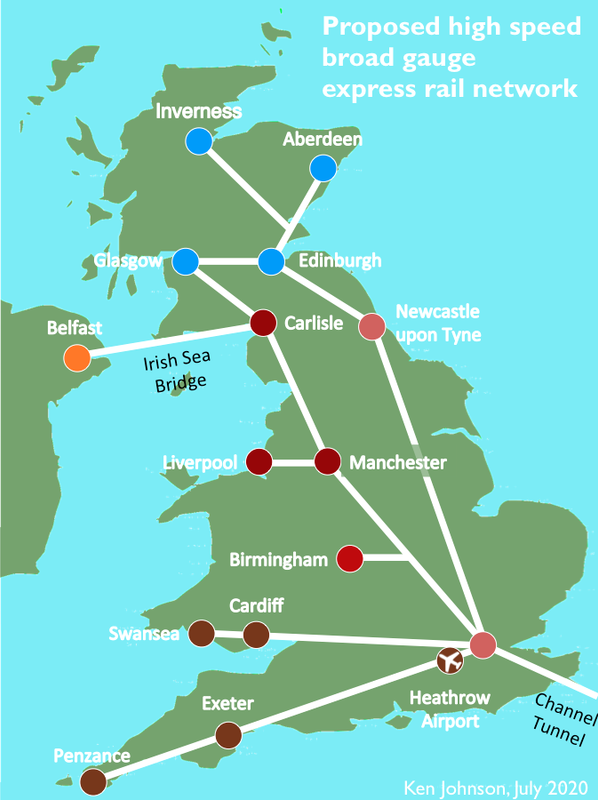
Fantasy Engineering: High Speed Railways Instead of HS2, build 1700 miles of broad gauge main line and enjoy the higher speed and greater stability of trains on the broad gauge.

UKHigh-Speed-Network
Proposed network of broad gauge high speed lines

One hundred and seventy five years ago, in 1845, the Royal Commission on Railway Gauges made a serious error of judgment. They decided that in future any new railway in Britain (but not Ireland, the whole of which was then part of the UK) would be built to the ‘standard gauge,’ that is, a distance between the rails of 4′ 8½″.

The Commission continued to sit and issue reports from time to time (no point wasting a good sinecure) and in 1893 they compounded their error by ordering that the Great Western Railway re-gauge its 177 mile long main line from London to Bristol and Penzance to ‘standard gauge’. The genius Isambard Kingdom Brunel, the chief engineer of the Great Western Railway, completed the re-gauging work in the space of a three day Bank Holiday week-end, beginning on 21 May 1892 and finishing on 23rd, a feat of engineering and project management which, I suspect, could not be done today.

The present debate about the need to build a special high-speed railway line, HS2, would not have come about if the Commission's decision had gone the other way and all the railways in Britain, except the Great Western and some narrow-gauge mining lines, had been re-gauged to Brunel's broad gauge of 7′ 0¼″, half as wide again as the standard gauge. We would probably be taking 200 mph train services for granted.

There are several ways of increasing the speed of a train service. You can reduce the load, for instance by building carriages out of lightweight materials. You can speed up the train, for instance putting a second locomotive at the back of the train. You can speed up the schedule, for instance by leaving out some station stops. Or you can speed up the track.

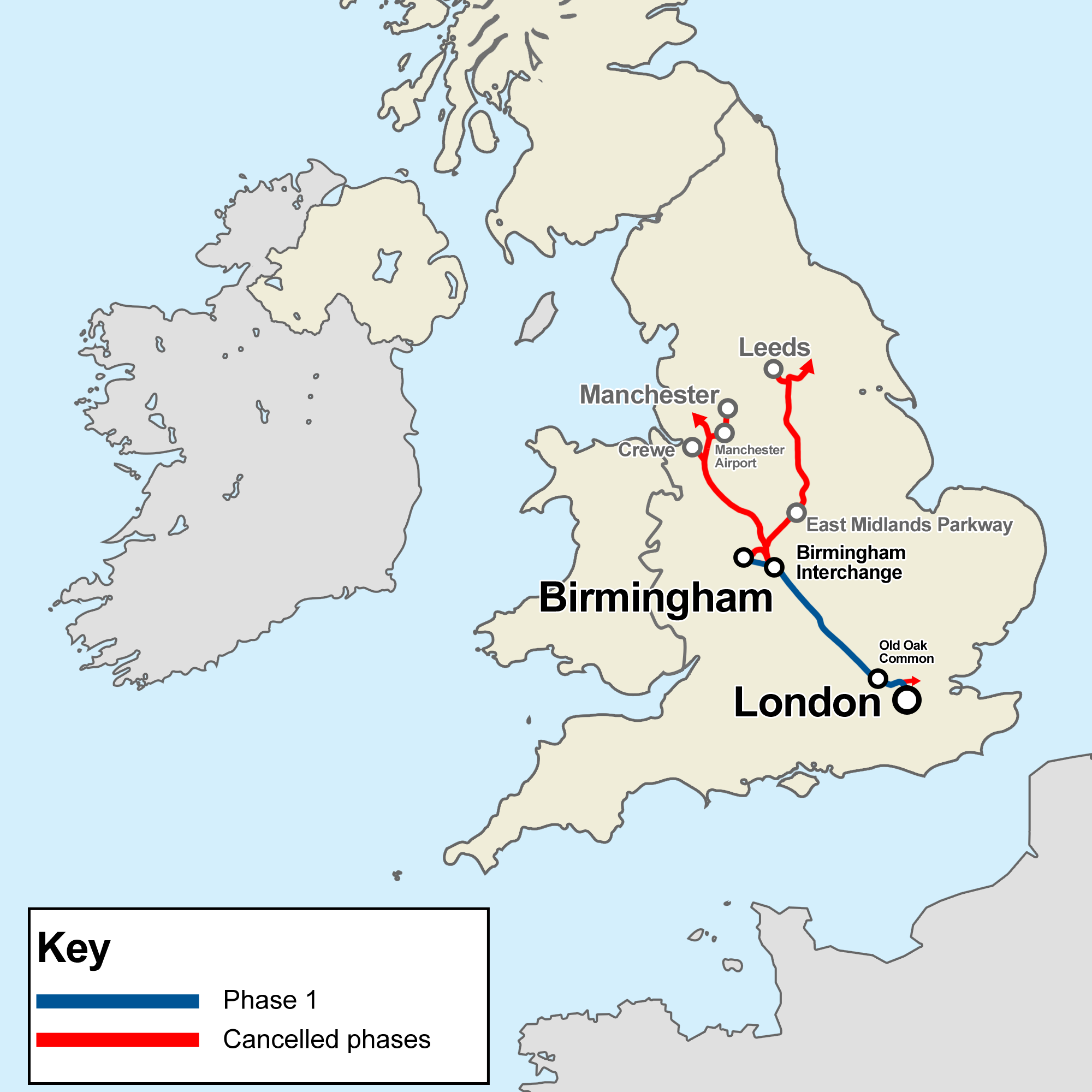
HS2 requires the building of completely new track. (Here is a map of it.) But there is a cheap alternative, which is to bring back the broad gauge on the routes that you want to accelerate.

Brunel's broad gauge Great Western services to London were noted in their day for going faster and giving a smoother ride than other main line competitors. This is not coincidence. Research carried out a century after Brunel's broad gauge was abandoned showed the relationship between track gauge and maximum speed. Many factors affect the maximum speed of a train on a track — gradient, curvature, weight and power — but other things being held constant, the greater the track gauge, the higher is the speed at which the train becomes unstable on the rails, and the wheels begin to ‘hunt’ from side to side. The speed at which the wheels begin to hunt is the train's maximum speed. There is an explanation of what keeps a train on the track in this Scientific American article, Train Wheel Science, and a full discussion of ‘hunting’ in this Wikipedia entry, Hunting Oscillation.

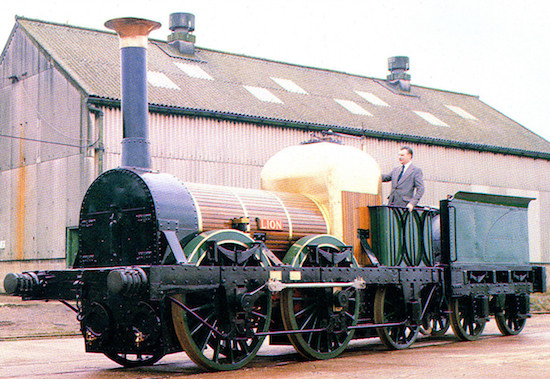
Lion Steam Locomotive
A replica of Lion, one of Brunel's broad gauge passenger steam engines

Broad-Gauge-Carriage
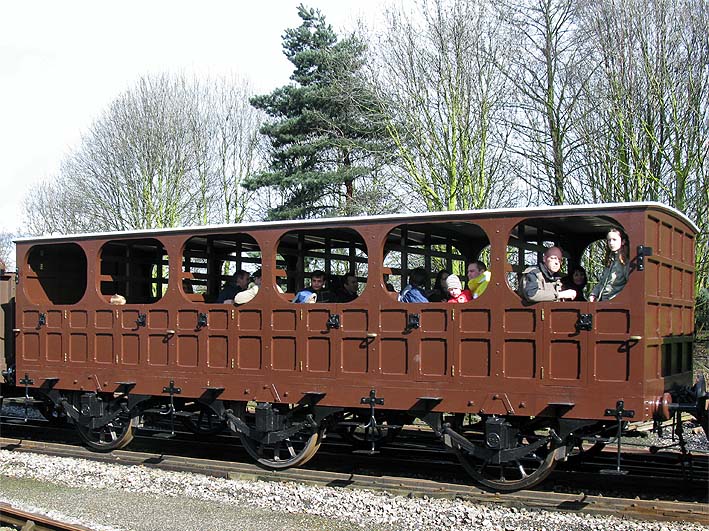
A replica of a broad gauge second class passenger carriage

Speed and journey times. The target to beat is a journey time from London to Birmingham, 101 miles, of 52 minutes, since that is the expected journey time on HS2. That would require an average speed of 117 mph. Trains can only accelerate gently, at a maximum of 0·1 g (3·2 ft.sec⁻²,) otherwise any standing passengers will fall over and hurt themselves. Therefore the maximum speed has to be appreciably higher than the average speed. You need a maximum speed of 175 mph to travel 101 miles from a standing start to a standing finish in 52 minutes.
Since the German ICE 3 train achieves a maximum speed of 206 mph in service on standard gauge track, and the Italian Frecciarossa achieves 187 mph, a maximum speed of 175 mph on broad gauge track does not appear over-ambitious. The difference is that ICE 3, Frecciarossa and the French TGV all run on specially built track. The broad gauge trains which I am proposing here run on existing track with modifications and, in general, require little by way of land acquisition.

The same maximum speed and acceleration suggest that the journey from London to Edinburgh, 440 miles, would take 3 hr 43 min, (118 mph) compared with the current fastest time of 4 hr 20 min (101 mph.)

Construction of HS2 is due to finish in the year 2035, so the development time for a broad gauge network has to be similar.

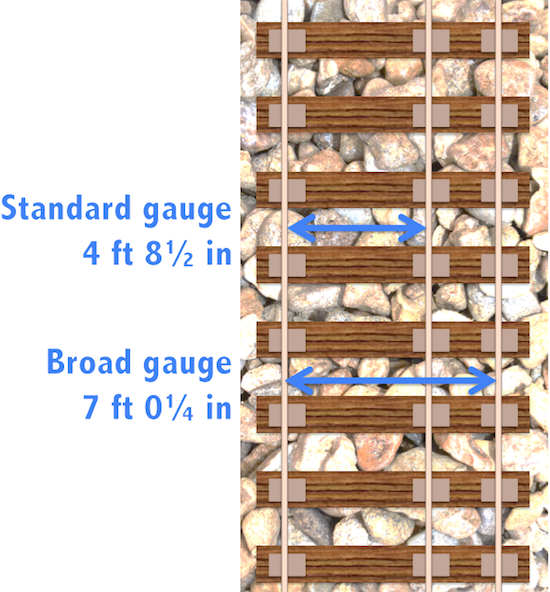
Broad gauge trains run on two rails seven feet apart, but that doesn't mean that Network Rail will need to rip up thousands of miles of standard gauge track and re-build it. It is sufficient to add a new rail to standard gauge track, like this:

Dual gauge track. The leftmost rail is common to both track gauges, the middle rail is used by standard gauge trains and the rightmost rail is used by broad gauge trains.

Dual gauge track is not unusual in many countries, though as far as I know there is none anywhere in Britain except for some replica track at Didcot Railway Museum. Greece and Switzerland, for example, have dual metre/standard gauge lines.

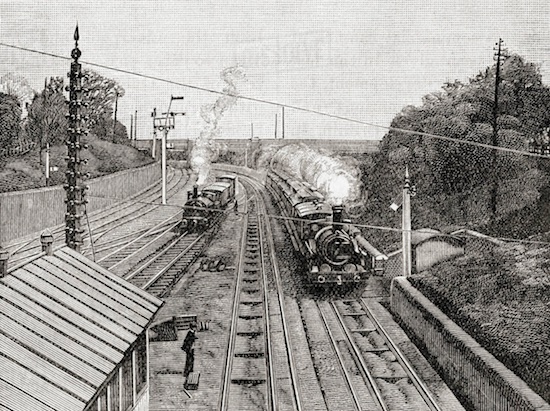
Broad gauge in its heyday: The Flying Dutchman passes Acton station, London, on dual gauge track at sixty miles an hour in the 19th century.

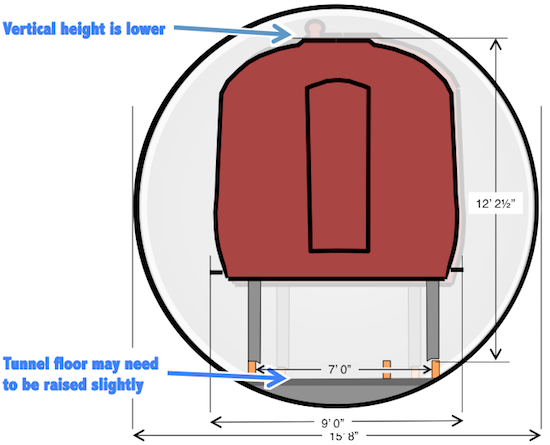
With careful attention to the profiles of broad gauge rolling stock, it should be possible to fit the broad gauge track under existing gantries, bridges and tunnels. Where platforms are adjacent to the common rail, they may be used unchanged, although platforms on the other side of the track will need re-locating, or a special track formation to allow standard gauge track to stop at them.

It is worth mentioning that Talgo technology allows a train to change from one track gauge to another as it moves. Adopting Talgo technology on broad gauge trains would mean that a train could leave the broad gauge and travel on a standard gauge line for reasons such as diversions. Talgo uses wheels mounted on square axles and track arrangements that change the gauge of the train as it travels.

British Profile
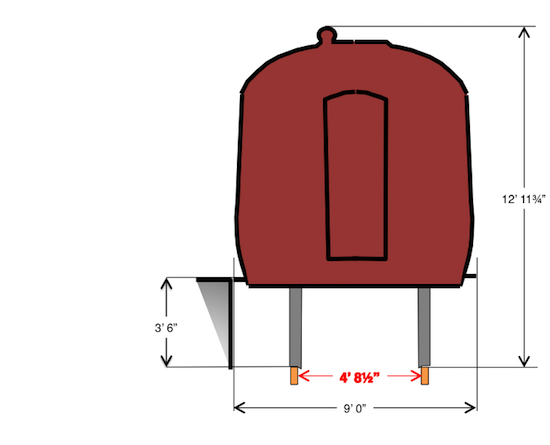
Profile of a British standard gauge passenger carriage

British Profile In Tunnel
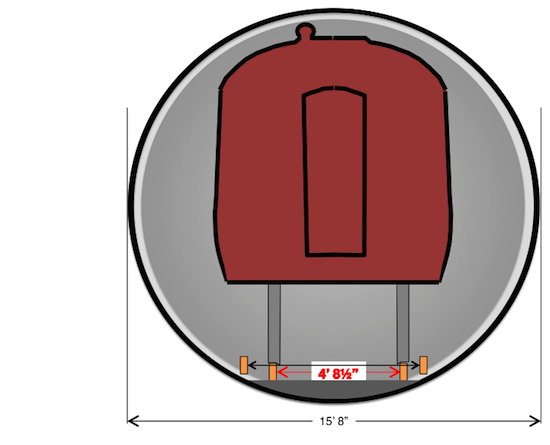
British standard gauge passenger carriage fits into a 12′ 6″ diameter tunnel with 6″ clearance all round

Broad-Gauge-Profile
Proposed broad gauge passenger carriage fits into a 12′ 6″ diameter tunnel with the same clearance, but the trackbed has to be raised slightly and the floor to ceiling height of the carriage is less than in a standard gauge carriage

Estimated costs. These are back-of-a-fag-packet figures, but we live in a world where any estimate of costs is considered better than none. (Ask Diane Abbott if you don't believe me.) In general there is very little land purchase cost, because the broad gauge track is achieved by dual gauging existing standard gauge track and keeping down the cost of re-building gantries, tunnels and bridges by designing broad gauge trains to fit within the present standard gauge clearances.
The cost of the proposed bridge across the Irish Sea is excluded, because the bridge is a separate infrastructure project and not in general financed by the railway.

It is possible to give an idea of the cost using figures from the report Guide to Railway Infrastructure Costs on the cost of recent reconstructions of railway lines. Those where the cost is expressed per mile range from £4½M per mile for the re-opening of Wisbech to £11M per mile for the Borders Railway including all infrastructure. The schematic diagram at the top of this page shows 1700 miles of dual gauge track, meaning the cost at 2020 prices might well lie between £8Bn and £14Bn.

It is estimated that a half hourly high speed service on each route could be provided by 68 trains. 68 broad gauge diesel locomotives cost about £136Mn (Railway Technical) and 12 passenger carriages per train cost in total about £122Mn (Transport Watch.)

A discussion of the cost of adapting the track and building broad gauge rolling stock begs the question of whether the adaptation should be carried out as a single project over, say, fifteen years like HS2, or whether it could be carried out in stages as different lengths of track take their turn to be renewed or repaired so that the dual gauging is done in an opportunistic way over, say, 100 years, or as long as it takes. Railways have been with us for all but 200 years and some projects have been carried out opportunistically, such as the electrification of the network, which could be said to have begun with the Volks Electric Railway as long ago as 1883, and which is still not complete. (There is an interesting precedent for this approach. In 1920 the Dutch government took a decision that where a road was renewed or replaced, the replacement would include a cycle track. After 100 years the Dutch road network is unique in its generous provision of cycle tracks.)

Opportunistic dual gauging reduces the cost greatly by taking advantage of workers and machinery which would have been in place anyway. It also raises the possibility of increasing the loading gauge.

Loading gauge. An opportunistic dual gauging policy could also include the raising of the loading gauge. This proposal suggests that the locomotives and passenger carriages of broad gauge stock should fit inside existing clearances, so as to avoid the need to enlarge bridges and tunnels. This includes the clearances for tilting trains, which are more comfortable at high speed, but have to be built so as to fit inside the same clearance as trains that don’t tilt.

The British railway network was the first in the world and, therefore, made all the mistakes. One of these was setting the maximum vertical height of a train at 12′ 6″. Other countries set their loading gauges higher, meaning that they were able to increase the capacity of a train by running double deck carriages.

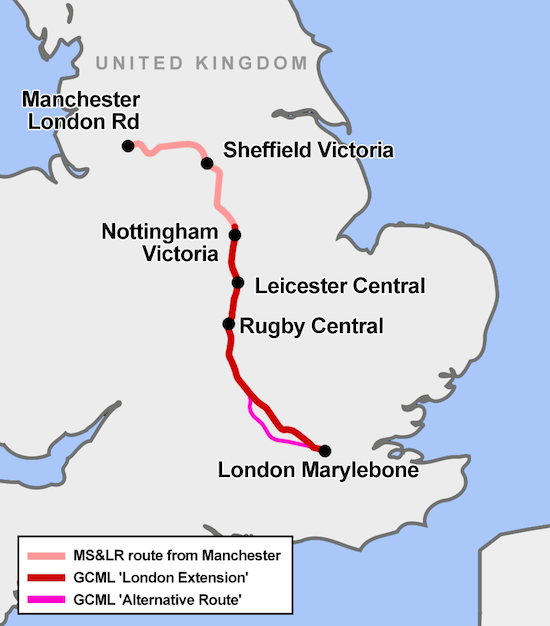
The British Great Central Railway was built to Continental clearances and would today have offered faster and bigger trains between Manchester and London, but absurdly it was closed by Marples and Beeching in stages ending in 1969.

As was observed at the time, ‘surely the prize for idiotic policy must go to the destruction of the until recently most profitable railway per ton of freight and per passenger carried in the whole British Railways system, as shown by their own operating statistics. This railway is of course the Great Central’ (Daily Telegraph, 28/09/1965)

Map of Great Central Railway
Map of the Great Central Railway from Manchester to London Marylebone

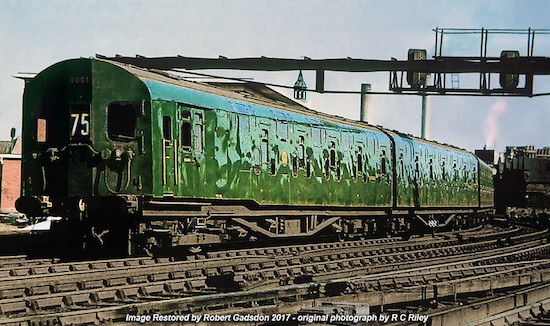
The closest that British railways have come to a double deck train is the 4DD class electric multiple unit, which had interleaved upper and lower decks and ran on the Southern Region in the 1950s.

SR Class 4DD
Southern Region's 4DD class double deck commuter train

Interleaved decks
Interleaved upper and lower decks

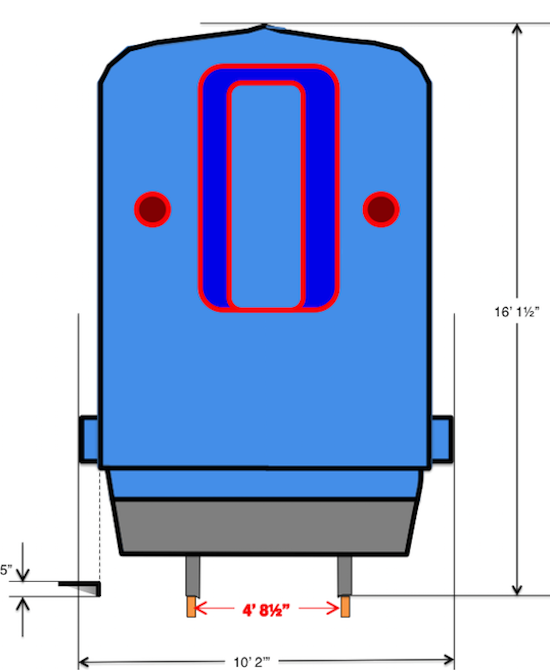
American Superliners take advantage of the high loading gauge of 16′ 6″ in the western states. European railways have a slightly lower loading gauge, but still big enough to allow the operation of double deck trains.

American Double deck carriage profile
Profile of American double deck Surfliner carriage

By permitting the re-gauging of the tracks and the increasing of vertical clearance to take a very long time, opportunistic enlargement of bridges, tunnels and gantries will allow double deck trains to operate on the British main line… but not until about the year 2120.

An express passenger train on the new broad gauge network might then look like this:

Double deck train in British Railways maroon livery
Double deck train in British Railways maroon

Tuesday, 23 June 2020

The new normal: How your favourite restaurant is going to look

According to a diagram in the Daily Mail, 21 June 2020, this is how your local restaurant is going to look:

Not sure I'm keen on sitting back to back with my wife at adjacent tables instead of just sitting side by side, but look on the bright side.

Firstly it will be a lot harder for your partner to say to you, ‘That looks nice,’ and expect you to give her the tastiest bit that you were quite looking forward to eating.

Secondly it might just bring back that marvellous forgotten invention, the kissing seat:

This allows you to sit side by side while facing in opposite directions and eating from different tables while still being a couple of feet apart. Not that anyone in their right mind would take their wife, girlfriend, boyfriend etc. to a restaurant for a romantic candle-lit dinner and then sit two feet apart, but at least you wouldn't be sitting back to back.

Sunday, 14 June 2020

The New Normal: How Your Local Shop Is Going To Look

I don’t understand how this is supposed to work.

Firstly, how on earth are shoppers supposed to go into the town (at least an hour on the depleted bus services we have now,) buy everything on their shopping list, and then lug all their shopping home, a total of three hours or thereabouts, all the while without going to the toilet? My local Marks & Spencer Food Hall is at the Gyle Centre in Edinburgh. The Gyle Centre has at least five toilets, all of them closed. I asked to use the toilet in the Food Hall: like most diabetics, I need to use the toilet often, and the toilet in the Food Hall was open for use by staff. The lady refused. I asked whether she would prefer me to piss on the floor or to go out into the car park. She was most offended by that. I can’t think why.

Secondly, once shoppers have reached the store, are we seriously expected to find everything on the shopping list in a single pass around the one-way system? Or are we seriously supposed to march round and round the one-way system until we have found everything we need?

And to top it all, the World Health Organisation tells us that there is no evidence that coronavirus is airborne. Suppose it turns out that coronavirus is not airborne but, like poliomyelitis, is spread by other means?

Back to the drawing board, guys.

I acknowledge the Mail Online for providing the original diagram in its issue dated 14 June 2020, now unavailable.

15 June 2020. Today’s edition of You and Yours on Radio Four received several emails about and how the closures of public toilets made shopping almost impossible.

Later on 15 June 2020. It has been pointed out to me (thank you, Georgia) that the way to get everything you need in a single pass through the one-way system is to put at least one of everything into your trolley as you go around the shop. Then when you have almost reached the check-out, take everything you don’t want out of the trolley and leave it there.

Saturday, 29 February 2020

Surrey

Surrey Apparently, Surrey is now a coronavirus hotspot, as two (2) cases of coronavirus have been found there.

Come, nuclear bombs, and fall on Surrey.
Take off and fly there in a hurry.
We need no doggerel to inspire us,
It’s riddled with coronavirus.

Acknowledgements to the great Sir John Betjeman.

Wednesday, 9 October 2019

Cure your own mental illness, say the Scroungers

Cure your own mental illness, say the Scroungers I notice that I haven’t posted anything to this blog since July. Mea culpa, but I just don’t care about ‘Brexit.’ I find it singularly deficient in interest.

However, there is more in the news than Brexit alone, though you might not think so if you don’t look further than the first half-dozen pages of your favourite newspaper. The story that caught my interest in the last few days is New NHS mental health website crashes moments after Prince Harry, Meghan Markle, Prince William and Kate Middleton appear in a three-minute TV advert to promote the campaign.

It seems that the voices of the Scroungers, curiously dubbed The Fab Four in the newspaper story, narrated an advertisement (you can watch it here, in MP4 format) for an NHS campaign about mental health, which has at its centre a website called Every Mind Matters. The website is described in what, I guess, is an NHS Press release as, ‘a new NHS resource offering personalised advice for people struggling with stress, depression or poor sleep.’

How a computer can offer personalised advice is beyond me. I guess the word personalised is being used in the same sense as in the personalised apology which the computer in the guard’s van plays when your train falls over a cliff, but let that pass.

The website offers homely guidance for the perplexed. If you are worried about money, it tells you to visit your local debt advice service. If you can’t sleep at night, if offers the uninentionally hilarious advice to ‘turn your phone off.’

As is pretty much usual when any government website is switched on, Every Mind Matters crashed a few seconds after going live. (Mind you, it’s running normally as I write, on 10 October 2019.) Were the producers off school on the day thay showed the kids how to load-test their web sites and how to provide some extra load-sharing capacity during periods when they expect high demand? But I digress.

Here is a photograph of the Scroungers sitting at your expense on cheap plastic chairs in what looks like a television studio and talking about mental health, a highly specialised branch of medicine which they know no more about than you do:


The first point that needs to be made is that being worried about losing your job, being upset because your dog died or losing sleep because you don’t have enough money to pay the electricity bill are not symptoms of mental illness. If anything, they are symptoms of living in a capitalist society where greed is rampant and employment is badly paid and intermittent, while the socialists in Parliament don’t understand that their well-paid jobs have a purpose.

The second point is that if you have a mental illness, talking about it does not cure you. If you suffer from non-reactive depression, schizophrenia, paranoia or bi-polar disorder, that is, if you can see snakes writhing towards you on your carpet, or you can hear the newsreaders on television sneering and telling filthy lies about you, or you can hear voices but you can’t see where they are coming from, you have a serious illness and you need to see a doctor.

The central idea of Every Mind Matters is that mental illness is really nothing to worry about — the best thing to do if you are mentally ill is to visit your local debt counsellor, turn the phone off and talk about your symptoms to a bloke down the pub over a pint of bitter. Expressed in this form, the idea might appear to be complete rubbish, but that’s only because it is complete rubbish.

The National Health Service cannot be excused for adopting this ‘Patient, heal thyself’ approach to treatment.

In a report published in the same newspaper on 10 April 2019 describing the state of specialist mental health services (Teenagers with mental health conditions are being turned away by the NHS unless they have tried suicide, officials warn) the Children’s Commissioner for England, Anne Longfield, describes clinics as ‘struggling to cope with an epidemic of self-harm, anxiety and depression, and … now turning patients away.’ (Ms Longfield, incidentally, ascribes the increasing incidence of mental illness among teenage girls to ‘pressures of social media and increasingly demanding school environments,’ for which ætiology, so far as I know, there is not a shred of evidence. The alternative explanation, that certain recreational drugs cause severe and irreversible brain damage, deserves at least as much credence.)

People who can’t sleep because they worry about buying enough food or keeping the electricity on are certainly victims of a crisis, but it isn’t a crisis of mental health. As I’ve suggested, it is a crisis of low pay and high unemployment. The real crisis in mental health services is similar to the crisis of the NHS generally: it does not have enough money or skilled staff to supply the needs of the public that it serves. The skilled staff will take years to train: if the full student grant were restored tomorrow, that would enable any school leaver with the talent and inclination to become a psychiatrist, but the first newly graduated, publicly funded psychiatrists would only be clocking in at their local clinic in about 2025.

Nevertheless, despite the enormous lead time (which is no longer than the lead time for building a hospital or developing a medicine) the restoration of the full student grant is the only way out of the crisis in mental health provision. Websites advising you to turn your phone off if it wakes you up are, at best, a way of making us laugh and wasting money that ought to have been spent treating ill patients, however many Scroungers sit in front of the cameras promoting them.

Thursday, 20 June 2019

Libra: at last, used notes in a plain brown envelope with a stable exchange rate

Digital Currency is almost as good as paying with used notes in a plain brown envelope Mark Zuckerberg, surely one of the most immediately recognisable faces on the whole of the internet, has announced that his company, Facebook, one of the most instantly recognisable wastes of time on the whole of the internet, is going to send forth a new digital currency, and its name shall be called Libra.

Digital currencies have been around for some years, so Mr Zuckerberg has taken the opportunity to learn by its predecessors’ mistakes. One of the advantages that Libra will have over the established brands will be that it will have a stable exchange rate, unlike Bitcoin, for example. Because there are not a lot of Bitcoins in circulation — only 21 million will ever be ‘mined’ — the exchange rate of Bitcoin has swung wildly, which makes it, incidentally, a good choice for currency speculators. The value of the Libra will be pegged to the value of a ‘basket of currencies,’ which may well be a reference to the IMF Special Drawing Right (XDR). If it is, then Libra will join the handful of currencies pegged to the XDR, which include the Seychelles rupee and the Syrian pound. The XDR has proved fairly stable, so the Libra, linked to the XDR, would likely be fairly stable too.

Compare the foreign exchange market:

    
The value of a Bitcoin has wobbled between £205 on 1 January 2015 and £14,380 on 18 December 2017. It is currently (20 June 2019) £7,496 Compared with Bitcoin, the XDR has proved fairly stable. (Note: the vertical scales of the two graphs are different.) In the last five years it reached a low point of 88p on 7 July 2014 and a high point of £1·13 on 17 October 2016. Currently it’s £1·10

If it can fulfil one of its design objectives and “make it as easy to send money as it is to send a text message,” Libra will likely be heavily used and a great success. If it achieves a stable exchange rate, the chance of finding that the money in your digital wallet or handbag has suddenly disappeared will be negligible. On the other hand, of course, your chances of finding that the few pence that you used to have in your digital wallet is suddenly worth countless millions of pounds will also be negligible. (Left: A 10,000 SDR banknote, worth about £11,000 in June 2020)

Thus, easy to use and stable in value, Libra may well have found a way around the best known disadvantages of digital currencies.

What of the best known advantage, the anonymity of digital currencies?

The desire for anonymity when paying money is not, of itself, a sinister thing. We all use cash, at least occasionally, and when we spend cash, we usually do so without leaving any record of who we are, when we made the payment, or what we bought. Going through the takings of a newsboy, an ice cream salesman or a bus conductor, we know only what amount was taken and (where there are tickets or receipts) how many transactions took place and the amount spent in each one. It is the desire to remove anonymity that is sinister, not the fact of it, and that may well be the motive behind the peculiar move to abolish coins and notes outright.

Digital currencies can be anonymous, like cash. That means that no information is passed from your plastic card, the merchant’s card reader or your card issuer that link your payments to you. Of course, there might be other means of linking you to your payments and purchases: for instance, if the merchant has a closed circuit television camera filming you as you use your plastic card. In principle, though, digital currency should pay the amounts that you want to pay but leave no trace of who paid them or what they paid for. Not that anonymous payments guarantee success to a digital currency. The digital currency E-Gold, whose design offered the card-holder complete anonymity, failed. Its use by criminals led, on 20 January 2015, to the suspension of E-gold transactions and, later, to the closure of the company.

So anonymity is really nothing that hasn't been going on for centuries and nothing to be scared of. The point that I haven’t heard anyone make, though, is that a conventional credit card or debit card could be used anonymously, but isn’t. If the pattern of messages between the card reading terminal, the card company and the payee’s accounts department were designed to make the payment anonymously, there would be no reason to open a separate account with a special anonymous payment card issued by a company every bit as dodgy as a two-year-old prawn sandwich.

Here’s one way of setting up the card reader and its contacts in the card company and the payee’s company so that you can pay a bill anonymously with an ordinary credit or debit card. At each stage, information is transferred only concerning the payment card and the value of the purchase. No information concerning the identity of the purchaser is given to the merchant.


Here’s another way of achieving the same thing. This way takes the load off the card reader and puts the onus of communicating with the merchant onto the data centre, which is usually a lot better equipped to provide it.


Since it isn't particularly difficult to design a card reader that accepts ordinary bank cards but processes them anonymously, might we hope that, at some time in the not too distant future, the High Street banks might offer anonymous payments with the ordinary credit and debit cards that everybody already has? I wish Libra every success in its enterprise but many of us need no more than a small enhancement to the plastic card services that we already have.

Incidentally the European Union is trying to kill off anonymous digital currencies because they think anonymous payments encourage terrorism. While that’s indubitably true, before they put an end to one of the most useful developments in information technology since the first archer tied a message to an arrow and shot it at a tree overlooking the Merry Men in the Forest, the European Union should first try insisting that companies who make and sell hand grenades, land-mines, machine guns and nuclear missiles should record the details of the people they sell them to and hand the record to the local Police at the end of every week’s business.

Notes. The design of the coin at the top of this page is based on two separate images, each of which are speculation in the Press rather than data from Facebook or Libra, so don’t waste your time trying to forge one. The One Libra banknote is of my own design.

Exchange rates and graphs are from XE Corporation.

Tuesday, 11 June 2019

Come to sunny Scotland!

Come to sunny Scotland! You don’t remember the days when Scotland was considered a holiday destination every bit as good as Magaluf and the Costa del Sol are now. This poster dates from about 1935.


Today, for one day only I expect, those days have returned. Look at today’s weather map.


Here is a picture of what I can see out of my kitchen window today:


Here is what I would be able to see out of my kitchen window if I lived in England:


It isn't often that you get the chance to say Come to sunny Scotland!

12 June 2016, 4.30 pm Today is a chilly day here. There has been no sunshine, and the rain began around mid-day. The bright and sunny weather was, clearly, sent to us only for one day.

The picture of a flooded street is from the Mail Online.